10 Questions to Ask Your Greece Wedding Photographer Before You Book and what the answers should tell you.
Everything You Need to ask Before Booking Your Photographer | An honest guide from one of the top photographers for weddings in Greece
Are you in the search for a Wedding photographer for your destination wedding in Greece?
Asking the right questions to your Greece wedding photographer before you book is one of the most important steps in planning your destination wedding. And one that most couples skip entirely.
It is easy to fall in love with a portfolio and book immediately. The images are beautiful, the website feels right, the price seems reasonable. But a portfolio tells you what a photographer can produce under ideal conditions. It does not tell you whether they will show up calmly under pressure, whether they understand Greek light and logistics, whether their contract protects you properly, or whether spending an entire day with them will feel comfortable or awkward.
The booking conversation is your opportunity to find all of this out before you commit.
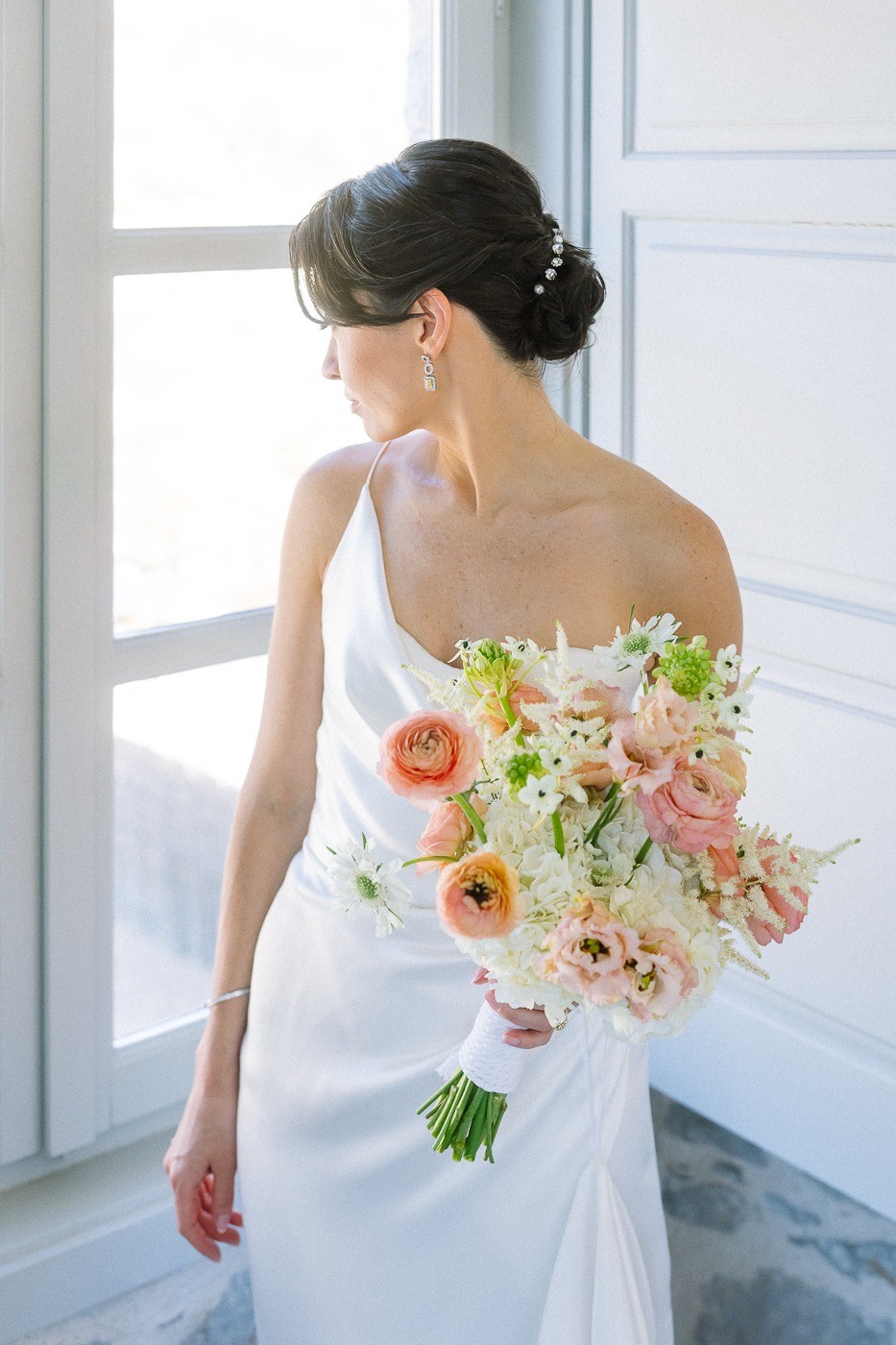
Here are the ten questions I believe every couple should ask, along with what the answers should and should not sound like.
1. How many weddings do you photograph per day?
This question reveals more about a photographer’s commitment to your day than almost anything else.
Some photographers double-book, photographing a morning wedding and an afternoon wedding on the same day. Others limit themselves to one event per day, giving you their complete attention, full energy, and undivided creative focus from start to finish.
What a good answer sounds like: “I photograph one wedding per day, always.” This is a firm commitment that your day will not be compromised by another booking earlier or later.
What to watch for: Vague answers, or “it depends on the timing.” This suggests double-booking is possible. For a destination wedding where the day often runs longer than expected and golden hour timing is everything, this matters significantly.
For what it’s worth — I photograph one event per day, without exception.
2. Have you photographed weddings on my specific island before? A question worth to ask your Greece wedding photographer
What a good answer sounds like: Specific. Named locations, named venues, knowledge of the island’s particular conditions. “I’ve photographed at Rocabella in Santorini — the light on that terrace at 7pm in September is extraordinary” is very different from “yes, I’ve shot in Greece before.”
What to watch for: Generic answers about Greece as a whole without specific island knowledge. Visiting an island once for a wedding is not the same as understanding its rhythms across multiple seasons and years.
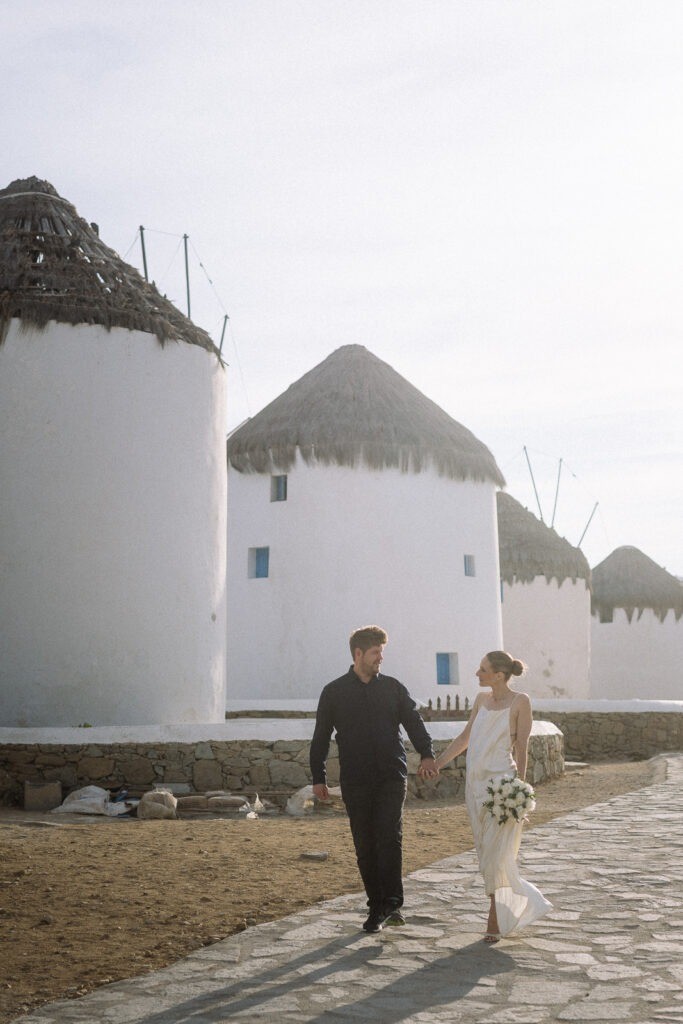
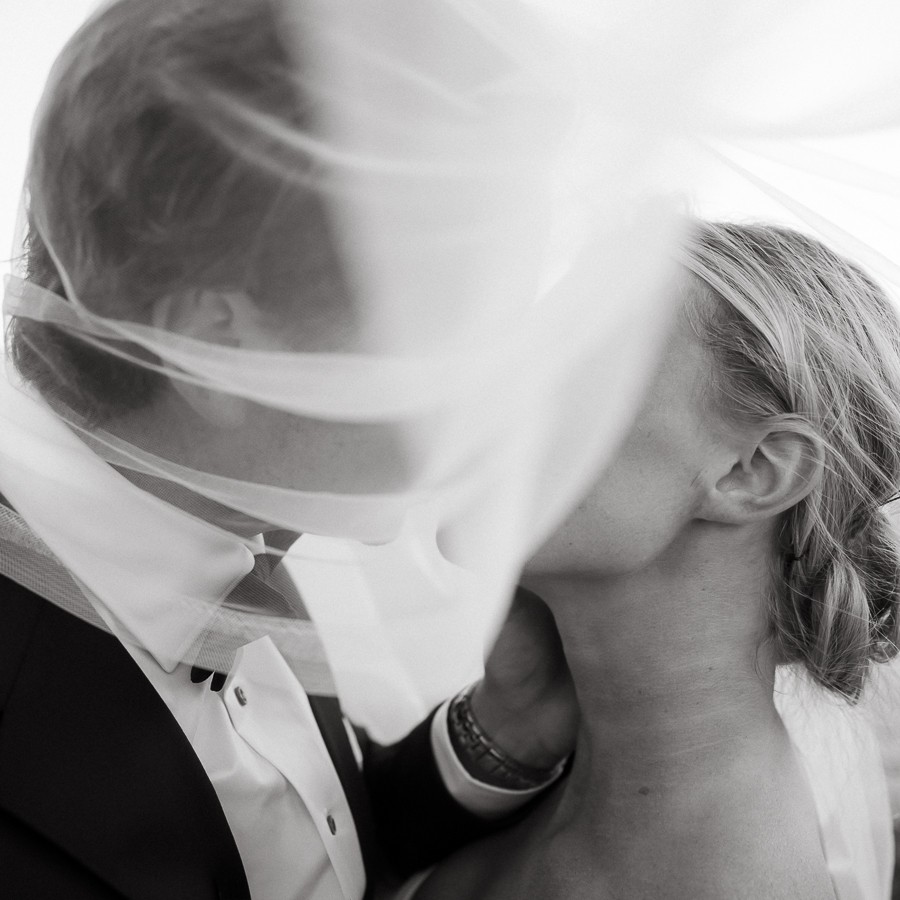
3. Can I see a full wedding gallery, not just highlights?
Every photographer has a collection of their twenty best images. A highlight reel tells you what is possible on a perfect day. A full gallery tells you everything else, how they handle difficult light, how consistent their editing is across 400 or 600 images, how they cover the moments between the moments, and whether their storytelling holds up across an entire day.
What a good answer sounds like: An immediate yes, followed by a link or a gallery sent promptly. Photographers who are confident in their work are happy to share complete galleries.
What to watch for: Reluctance, or “I don’t usually share full galleries.” This is a significant red flag. If a photographer cannot show you what a complete wedding day looks like in their hands, you have no way of knowing what you will actually receive.
4. What is your approach — do you pose couples or work documentarily?
Greece is not one place. Each island has its own rhythm, and your timeline should reflect that.
This question gets to the heart of what kind of images you will receive. Photographers who work in a heavily directed, posed style will produce images that look polished but often feel performative. Photographers who work documentarily capture what genuinely happens. The emotion, the spontaneity, the real connection between two people. Many good photographers blend both approaches, offering gentle direction when useful and stepping back when the moment speaks for itself.
What a good answer sounds like: A clear, specific description of how they actually work, not marketing language. “I give gentle direction to help couples feel comfortable, but I never interrupt a genuine moment to set up a shot” is concrete and honest.
What to watch for: Vague answers that promise everything to everyone. “I adapt to whatever you want” without a clear underlying philosophy suggests a photographer without a defined approach, which often produces inconsistent galleries.
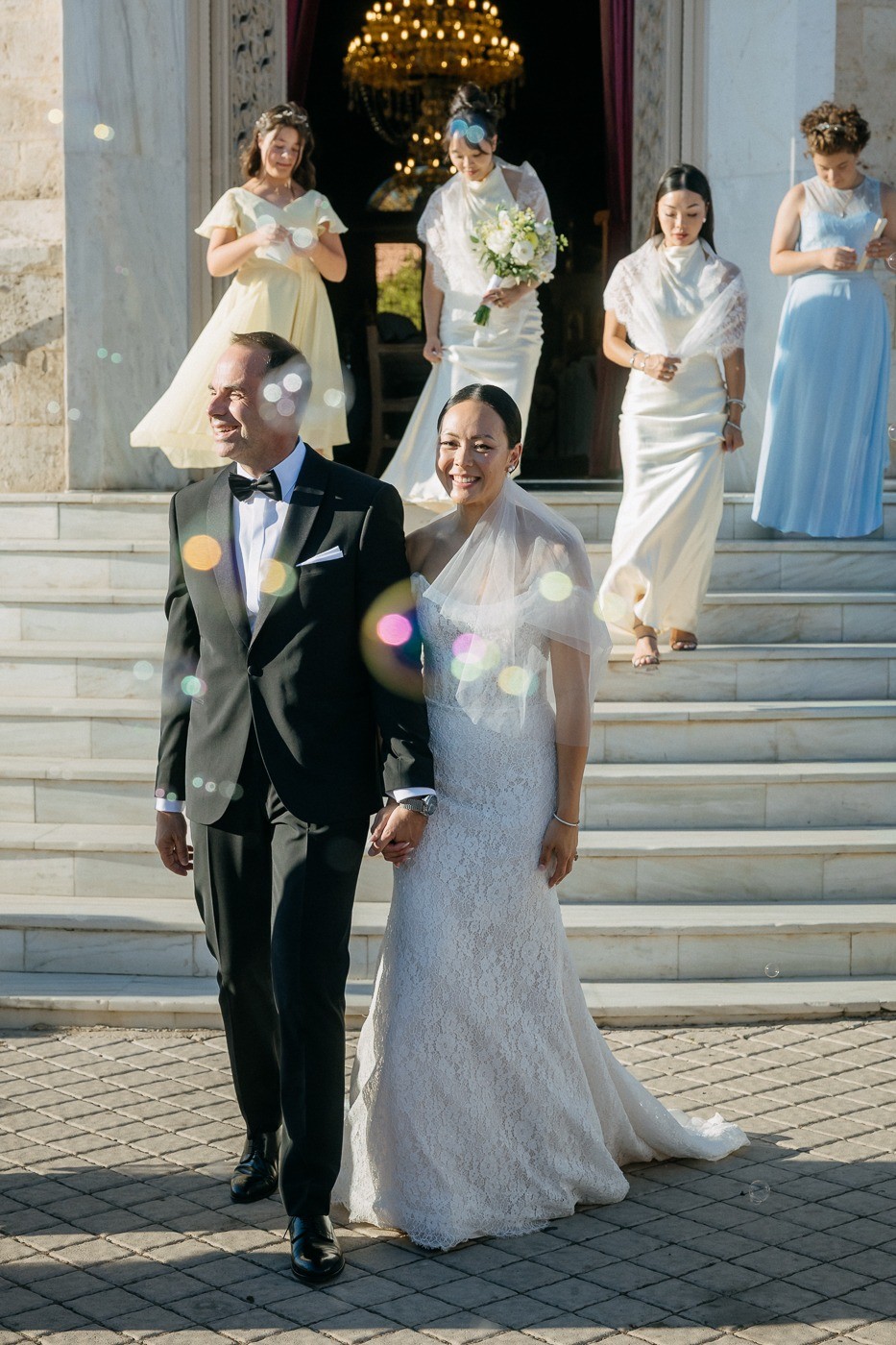
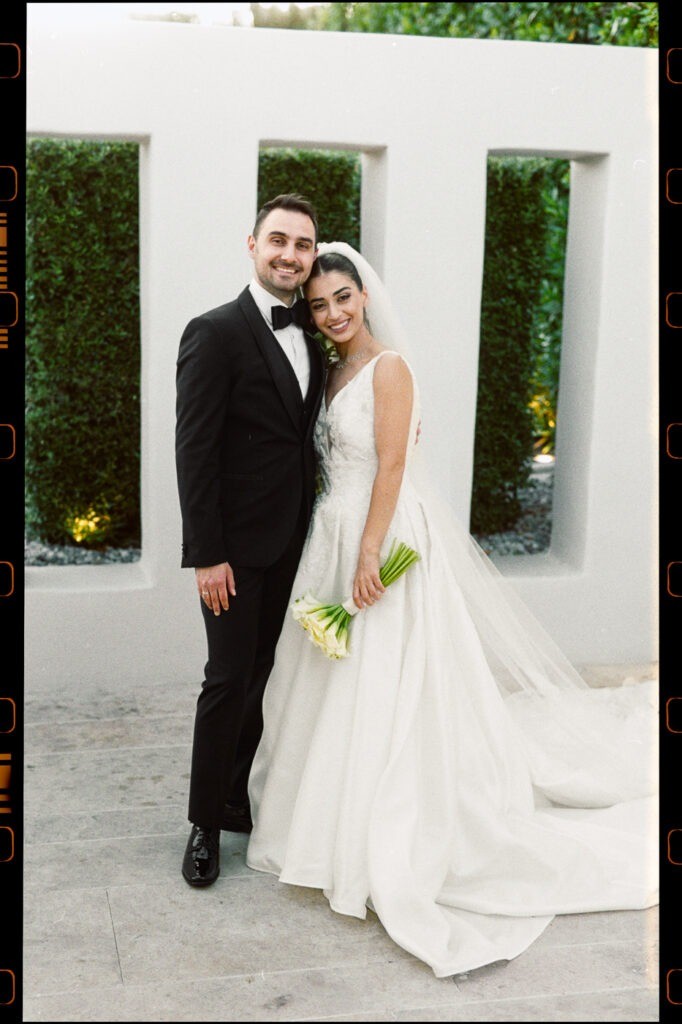
5. Do you shoot film as well as digital? A not so important question to ask your Greece wedding photographer, worth doing it though.
Not every couple wants film, and not every photographer offers it. But asking this question opens up a conversation about the photographer’s creative depth and their understanding of light and colour. Photographers who shoot film develop a trained eye for light quality that influences their digital work even when film is not used. Film adds warmth, grain, and a timeless quality to wedding galleries that digital alone struggles to replicate.
What a good answer sounds like: Either a genuine explanation of their film approach and what it adds, or an honest “I work purely digital, and here’s why that works for my style.” Both are valid answers — the honesty is what matters.
What to watch for: Dismissiveness about film without explanation, or the opposite — overselling film as the answer to everything. Both suggest a photographer who has not thought carefully about the tools they use and why.
6. What happens if you are injured or ill on my wedding day?
Nobody wants to ask this question, and most photographers are never asked it. But a destination wedding in Greece is not like hiring a local vendor — you and your guests have traveled thousands of miles. Understanding what contingency plan exists if your photographer cannot make it is essential.
What a good answer sounds like: A clear, specific plan. A trusted colleague or network of photographers who can step in, a contractual clause that addresses this scenario, and transparency about how it would be handled.
What to watch for: Discomfort with the question, or “it won’t happen.” Every professional has considered this scenario. A photographer who has not, or who has no plan, is a risk you should not take with a destination wedding.
7. What do your contract and cancellation terms cover?
A contract is not just a formality — it is what protects both of you if something goes wrong.
For a destination wedding specifically, clear terms around cancellation, force majeure (including weather events, travel disruption, and illness), retainer refund policies, and delivery timelines matter enormously. You are booking months or years in advance, often from a different country, in a currency that may not be your own.
What a good answer sounds like: A photographer who can explain their contract clearly, who invites you to read it carefully before signing, and who is willing to discuss any terms that concern you. Transparent pricing including VAT and travel fees — stated upfront, not revealed at the end — is a strong positive signal.
What to watch for: Reluctance to discuss contract terms before payment, or vague language around cancellation and refund policies. Any “trust me, it’s standard” response to a specific contractual question is worth examining closely.
8. How do you handle challenging light conditions?
Greece is extraordinary for photography — but it is not always cooperative. Midday summer light is harsh and flat. Strong winds affect both couple and camera. Overcast days eliminate the golden tones that make Greek island photography so distinctive. Understanding how a photographer adapts to conditions that are less than ideal tells you a great deal about their technical skill and creative resourcefulness.
What a good answer sounds like: Specific techniques and genuine experience. “On overcast days I look for reflective surfaces, open shade, and architectural framing, the light is actually very flattering for portraits.” A photographer who has worked through difficult conditions many times will have concrete, confident answers.
What to watch for: Deflection, or an answer that only describes ideal conditions. Every photographer loves golden hour. The interesting question is what they do when it does not arrive.
9. How long will it take to receive my gallery, and what is included?
Delivery timelines vary significantly between photographers, from four weeks to six months. And what is included in the gallery (number of images, editing style, resolution, printing rights) varies just as much. Understanding exactly what you will receive, and when, prevents the disappointment that comes from misaligned expectations.
What a good answer sounds like: Specific numbers and clear inclusions. “You will receive approximately 500–800 fully edited, high-resolution images within 8–12 weeks, delivered via a private online gallery with full printing rights.” Every element of that sentence matters.
What to watch for: Vague timelines (“a few months”), unclear image counts (“as many as needed”), or hidden restrictions on printing and usage rights. If a photographer cannot give you a specific delivery commitment, ask why.
10. Last question to ask your Greece wedding photographer: Why do you photograph weddings in Greece specifically?
This last question is not practical, it is personal. The answer tells you who the photographer is, why they do this work, and whether their values and approach align with yours. Photographers who photograph weddings in Greece because they genuinely love the islands, understand the light, and are moved by the stories they document will produce fundamentally different work from photographers who are there because Greece is a popular destination wedding market.
What a good answer sounds like: Genuine, specific, and personal. A photographer who can tell you what it feels like to stand on a Karpathos clifftop at golden hour, or what makes the light on Tinos in October unlike anywhere else, is someone who has paid real attention to where they work.
What to watch for: Generic enthusiasm without specific detail. “Greece is so beautiful” is not an answer, it is a deflection. The photographer who photographs your Greece wedding should know it deeply enough to show you something you have never seen before.
The Conversation Matters as Much as the Questions you ask your Greece wedding photographer
The answers to these questions matter. So does the experience of asking them.
A photographer who answers with patience, specificity, and genuine warmth, who treats your questions as the reasonable due diligence of someone making an important decision, is demonstrating in the conversation exactly how they will approach your wedding day.
→ Read a complete guide about wedding photography in Greece
Pay attention to how the conversation feels.
Does the photographer ask about you and your day, or do they only talk about themselves? Do they seem genuinely interested in your vision, or are they running through a sales process? Do they make you feel comfortable asking difficult questions, or slightly pressured to move forward?
The right Greece wedding photographer will make the booking conversation feel like the beginning of a collaboration rather than the closing of a transaction. That difference matters — and you will feel it immediately.
If you would like to ask me any of these questions directly, I would love to hear from you →
Frequently Asked Questions On How to choose a Greece Wedding photographer
For peak season dates between May and October, begin your search 12 to 18 months in advance. The best photographers fill their calendars early, particularly for popular months like June and September. If your wedding is within six months, reach out immediately — last-minute availability does occasionally exist, but it cannot be counted on.
Yes, without exception. A video call tells you things no portfolio or email exchange can — how the photographer communicates, whether their energy feels right, and whether they listen as well as they speak. For a destination wedding, this conversation is essential before making any financial commitment.
Completely normal and entirely reasonable. Genuine testimonials from past couples — particularly destination wedding couples from similar backgrounds to yours — are among the most valuable information you can gather before booking.
At minimum: the date, location, hours of coverage, number of edited images, delivery timeline, retainer and payment schedule, cancellation and force majeure terms, copyright and usage rights, and any additional fees including travel, VAT, and accommodation where applicable.
For a full wedding day of 8 hours, most experienced photographers deliver between 500 and 900 fully edited images. For elopements of 4 to 5 hours, expect 300 to 500. Be cautious of photographers who promise unlimited images — quantity without curation is rarely in your interest.
In Greece, VAT of 24% applies to photography services. Always confirm whether quoted prices include or exclude VAT before comparing packages, as this significantly affects the total investment.
Vasilis Liappis is a Greece wedding & elopement photographer based in Athens and Karpathos, photographing love stories across Santorini, Mykonos, Tinos, Crete, Kefalonia, and beyond. His work has been recognised by Junebug Weddings, ProWed, Fearless Photographers, and MyWed.