The Complete Guide to Eloping in Greece: Everything You Need to Know from your Greece elopement photographer
Planning on Eloping in Greece feels overwhelming at first.
After photographing several elopements across Greece, from windswept cliffside ceremonies to intimate vineyard vows, I’ve learned what actually matters when couples choose to elope in Greece. This isn’t a surface-level destination guide. This is everything I wish couples knew before they booked their flights.
What Does “Eloping in Greece” Actually Mean?
Let’s start with clarity. Eloping in Greece can mean three very different things, and understanding which one you want will shape every decision that follows:
1. Adventure Elopements
You, your partner, possibly a photographer, and Greece’s wildest landscapes. No guests, no reception, no traditional wedding structure. Just vows exchanged on a clifftop, a beach at dawn, or a mountain trail. This is the most stripped-down version—focused entirely on experience over production.
Best for: Couples who want absolute freedom, privacy, and the wedding day to feel like an adventure rather than an event. Budget typically ranges from €3,000–€8,000.
2. Intimate Weddings (Micro Weddings)
You invite 10–30 people. There’s a ceremony, usually a meal, sometimes dancing. It’s still intentionally small, but there are guests and some traditional elements. This sits between elopement and wedding.
Best for: Couples who want to celebrate with close family but avoid the stress and cost of a large wedding. Budget typically ranges from €8,000–€20,000 depending on guest count and venue.
3. Venue Elopements
Just the two of you (or a tiny group), but you’re getting married at a proper wedding venue—a hotel terrace, a villa, a winery. The venue provides structure, amenities, and often an all-in-one package. Less adventurous, more luxurious.
Best for: Couples who want the intimacy of eloping with the polish and convenience of a venue. Budget typically ranges from €5,000–€15,000.
My observation: Most couples think they want option 1 (adventure elopement), then realize halfway through planning they actually want option 3 (venue elopement with polish). Be honest about which kind of couple you are before you start booking.
Why Couples Choose Greece for Elopements
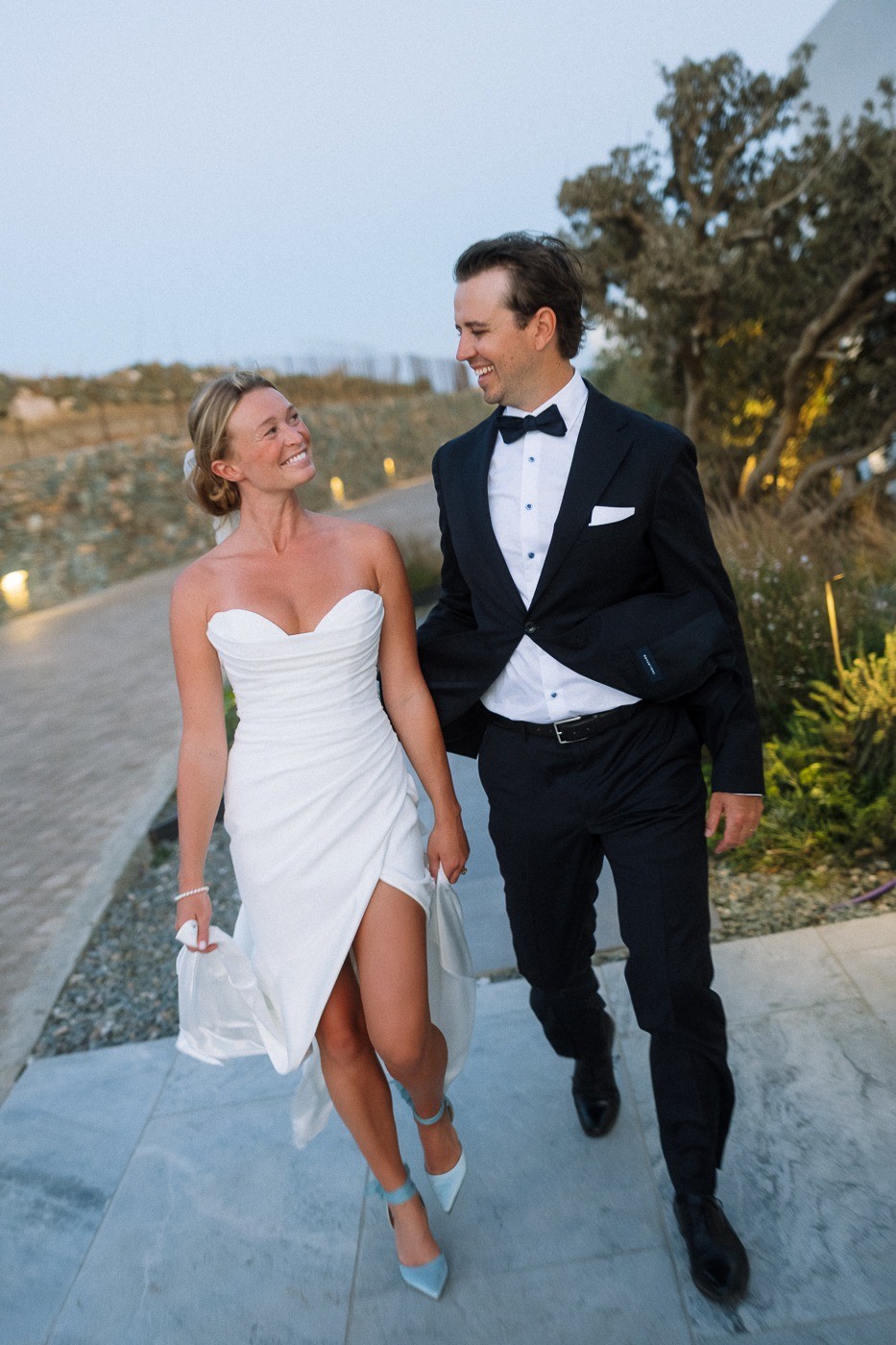
Greece isn’t just beautiful, plenty of places are beautiful. What makes Greece work for eloping there:
- Visual drama without effort: The landscapes do the work. Whitewashed villages, volcanic cliffs, turquoise water, ancient ruins. You don’t need elaborate decor when your backdrop is naturally cinematic.
- Year-round feasibility: Unlike many destinations, Greece has genuinely good weather 8–9 months a year. April through November are all viable, with different seasonal advantages.
- Legal simplicity (if you plan ahead): Greece allows legal marriages for non-residents, though the bureaucracy requires advance planning. Many couples opt for legal ceremonies at home and symbolic ceremonies in Greece.
- Cultural romanticism: There’s something about exchanging vows in a country with thousands of years of mythology, philosophy, and history. It adds weight to the moment.
- Value compared to other Mediterranean destinations: Greece offers better value than Italy or the French Riviera while maintaining similar aesthetic appeal.
The Real Costs of Eloping in Greece (2026 Breakdown)
Here’s what you’ll actually spend, based on current 2026 pricing. I’m giving you ranges because Greece has massive price variation between islands and seasons.
Core Elopement Costs
| Expense Category | Budget Option | Mid-Range | Luxury |
|---|---|---|---|
| Photography (4–6 hours) | €1,200–€1,800 | €2,500–€4,000 | €5,000–€8,000+ |
| Officiant/Celebrant | €300–€500 | €600–€900 | €1,200–€2,000 |
| Flowers (bouquet + boutonniere) | €150–€250 | €300–€500 | €600–€1,200 |
| Hair & Makeup | €200–€350 | €400–€600 | €800–€1,200 |
| Accommodation (3–5 nights) | €400–€800 | €1,000–€2,500 | €3,000–€8,000+ |
| Flights (from Europe) | €200–€400 pp | €400–€700 pp | €800–€1,500 pp |
| Legal Paperwork (if legal) | €500–€800 | €800–€1,200 | €1,500–€2,500 |
| Planner/Coordinator | €800–€1,500 | €2,000–€3,500 | €4,000–€7,000 |
Additional Costs to Consider when eloping in Greece
- Videography: €1,500–€5,000 (optional but increasingly popular)
- Rehearsal dinner: €100–€300 for two at a nice restaurant
- Post-elopement celebration meal: €80–€250 for two
- Permits for certain locations: €50–€300 (beaches, archaeological sites, some public areas)
- Transportation/car rental: €200–€600 for the week
- Wedding attire: Highly variable, but budget €500–€3,000 total
- Rings: Your call entirely
Total Realistic Budget Ranges:
- DIY Adventure Elopement: €3,000–€6,000
- Mid-Range Coordinated Elopement: €8,000–€15,000
- Luxury All-Inclusive Elopement: €18,000–€35,000+
These totals include flights and accommodation for two people for 4–5 days.

Best Greek Islands & Locations for Elopements and intimate weddings
Not all Greek islands are created equal for elopements. Here’s the honest breakdown of where to go based on what you actually want.
Santorini
Best for: Iconic sunset photos, luxury venues, couples who want the “classic” Greek island aesthetic.
The reality: Santorini is the most photographed island for a reason—the caldera views, white-and-blue architecture, and volcanic beaches are genuinely spectacular. But it’s also the most expensive and most crowded. If you elope here, do it in April, May, October, or November. Avoid June–September unless you’re comfortable with tour bus crowds photobombing your ceremony.
Cost level: High. Expect to pay 20–30% more than other islands for the same services.
Best ceremony locations: Oia cliffs (permit required), Skaros Rock, private villa terraces, Pyrgos village, black sand beaches at sunrise.
Mykonos
Best for: Party atmosphere, beach clubs, couples who want glam and nightlife as part of their elopement trip.
The reality: Mykonos is about energy, not serenity. The beaches are beautiful, the architecture is Cycladic-classic, and the dining scene is excellent. But this is not where you go for quiet, contemplative vows. It’s where you go if you want to get married during the day and celebrate hard at night.
Cost level: Very high. Mykonos rivals Santorini for expense.
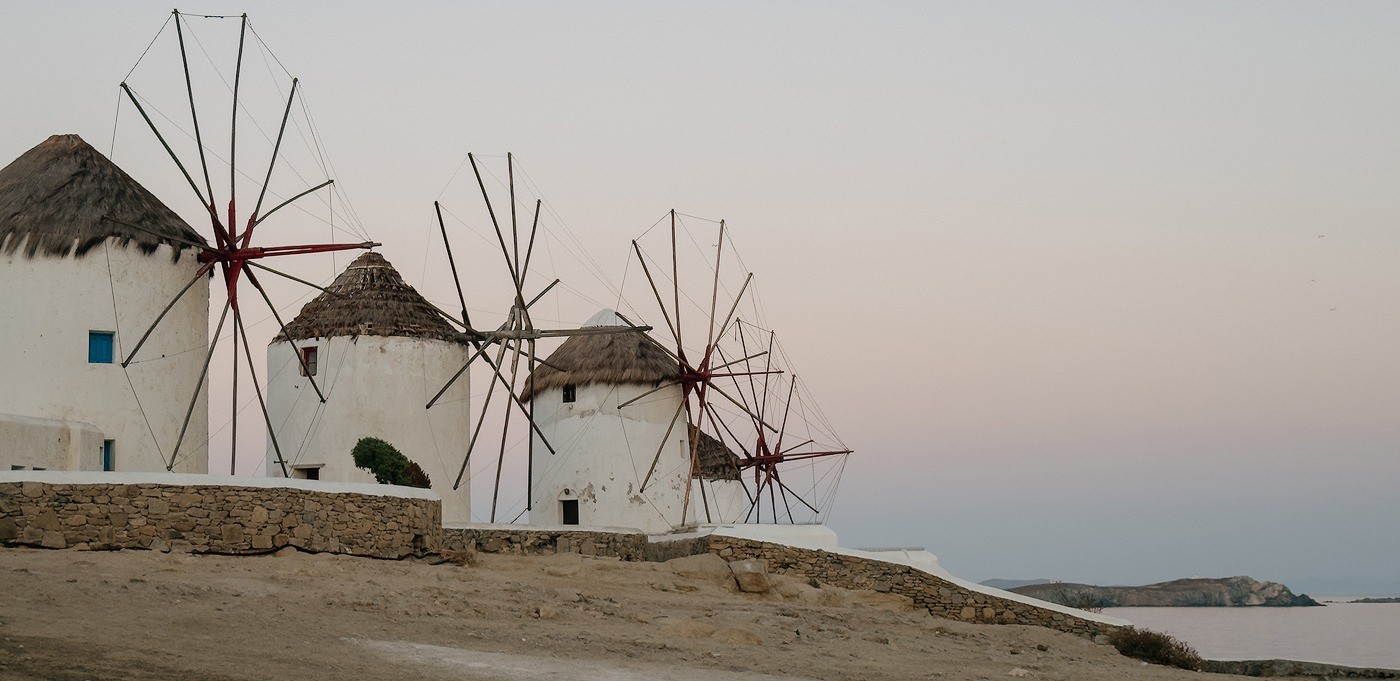
Best ceremony locations: Agios Sostis beach (less crowded), windmill backdrop in Mykonos Town, private villa overlooking Ornos.
Crete
Best for: Adventure elopements, variety of landscapes, budget-conscious couples, anyone who wants to combine beach and mountains.
The reality: Crete is massive and wildly diverse. You can have a beach ceremony in Elafonissi, mountain vows in Samaria Gorge, or a village ceremony in the White Mountains. It’s less touristy than Santorini/Mykonos, more authentic, and significantly cheaper. The downside is it’s less “Instagram-perfect”—the beauty is raw, not polished.
Cost level: Low to mid-range. Best value in the Aegean.
Best ceremony locations: Balos Lagoon, Elafonissi pink sand beach, Matala caves, Chania Venetian harbor.
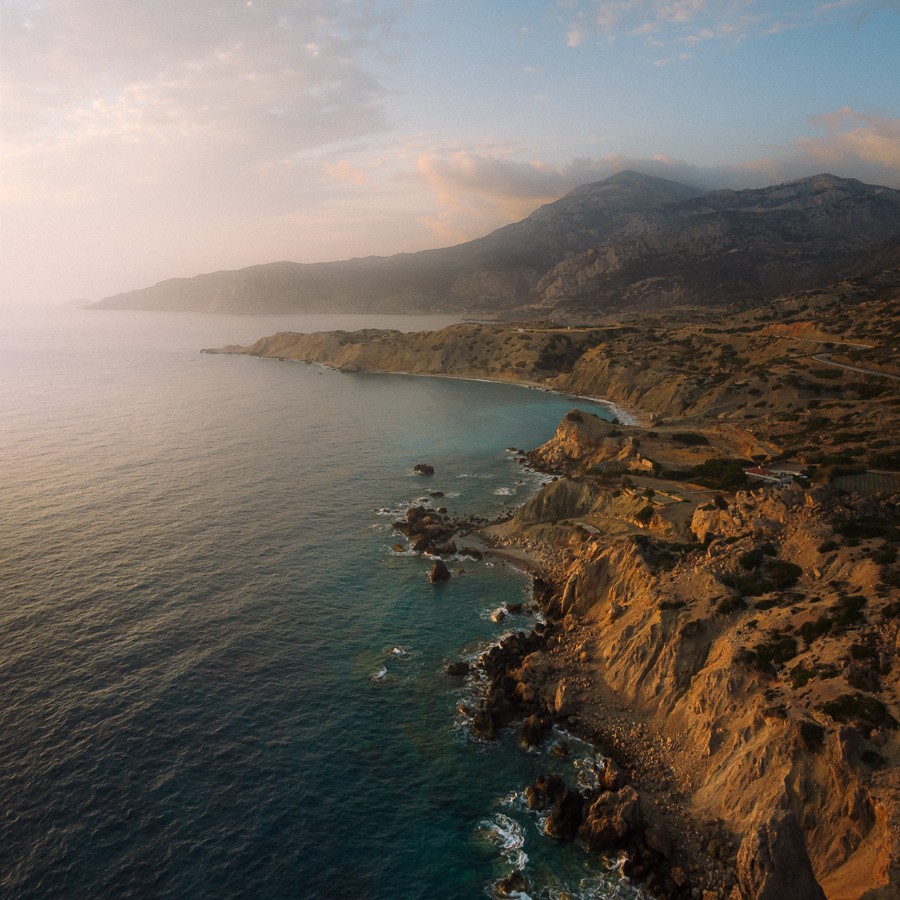
Karpathos: My personal favorite!
Best for: Total privacy, dramatic landscapes, couples who actively avoid tourist scenes.
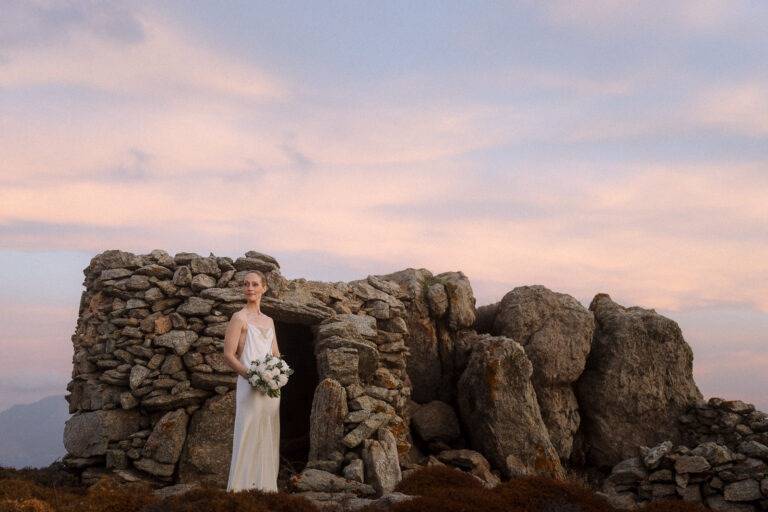
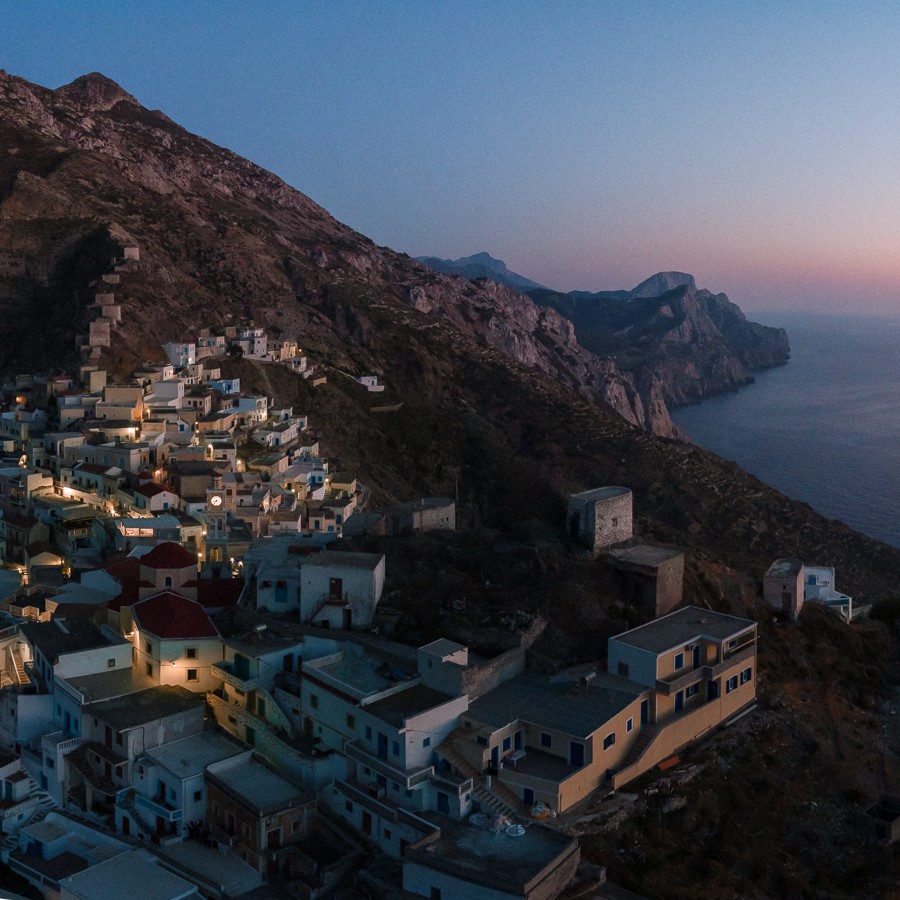
The reality: Karpathos is remote, windswept, and authentically Greek and has been recognized as one of the world’s ten “remaining paradises”. If Santorini is the polished showroom, Karpathos is the wild original. Expect vertical cliffs, relentless wind, empty beaches, and villages that haven’t changed in decades. This is not easy logistics, but if you want to feel like you’re the only two people in Greece, this is where you go.
Cost level: Mid-range. Limited luxury options keep prices moderate.
Best ceremony locations: Apella Beach, Olympos Mountain, Kyra Panagia ruins, Ammopi cliffs.
Paros & Antiparos
Best for: Laid-back couples, authentic Cycladic charm without Santorini crowds, good food scene.
The reality: Paros is what Mykonos used to be before it became a scene. It has beautiful beaches, charming villages (Naoussa and Parikia), excellent restaurants, and a genuinely relaxed vibe. Antiparos, even quieter, is a short ferry away. This is the sweet spot for couples who want Cycladic beauty without the hype.
Cost level: Mid-range. Reasonable for what you get.
Best ceremony locations: Kolymbithres Beach, Parikia waterfront, Antiparos caves, Lefkes village.
Milos
Best for: Unique beaches, volcanic landscapes, couples who want something visually distinctive.
The reality: Milos has the most diverse beaches in Greece—lunar-like Sarakiniko, turquoise Kleftiko accessible only by boat, geothermal Paleochori. It’s less developed than Santorini but more interesting geologically. You’ll get dramatic photos without fighting crowds.
Cost level: Mid-range to high, depending on season.
Best ceremony locations: Sarakiniko moonscape, Kleftiko sea caves (boat required), Firopotamos fishing village.
Folegandros
Best for: Secluded luxury, clifftop drama, couples who want Santorini-level views without Santorini-level crowds.
The reality: Folegandros is the secret favorite of Greeks who are tired of tourist islands. Chora (the main village) clings to a cliff with stunning sea views, and the island has remained authentically Greek despite recent boutique hotel development. If you want intimacy with sophistication, this is it.
Cost level: Mid-range to luxury.
Best ceremony locations: Church of Panagia overlooking the sea, Chora clifftop, Katergo Beach.

Planning Timeline: When to Book What for your Greece elopement
The biggest mistake couples make is underestimating how far in advance Greek vendors book up. Here’s the realistic timeline:
12–18 Months Before
- Book your photographer (top photographers fill up 12–18 months out for peak season)
- Decide on legal vs. symbolic ceremony
- Choose your island and general location
- Research accommodation (don’t book yet unless it’s a specific villa you can’t risk losing)
9–12 Months Before
- Book accommodation (luxury villas and boutique hotels fill up)
- Hire a wedding planner/coordinator if using one
- Book flights (prices increase closer to date, especially for summer)
- Book celebrant/officiant
- Start legal paperwork if having a legal ceremony in Greece
6–9 Months Before
- Book hair and makeup artist
- Book florist
- Book videographer if you want one
- Finalize ceremony location and secure any required permits
- Order wedding attire
3–6 Months Before
- Confirm all vendors and create timeline
- Book restaurant reservations for pre/post-elopement dinners
- Arrange transportation (car rental or driver)
- Finalize legal documents if applicable
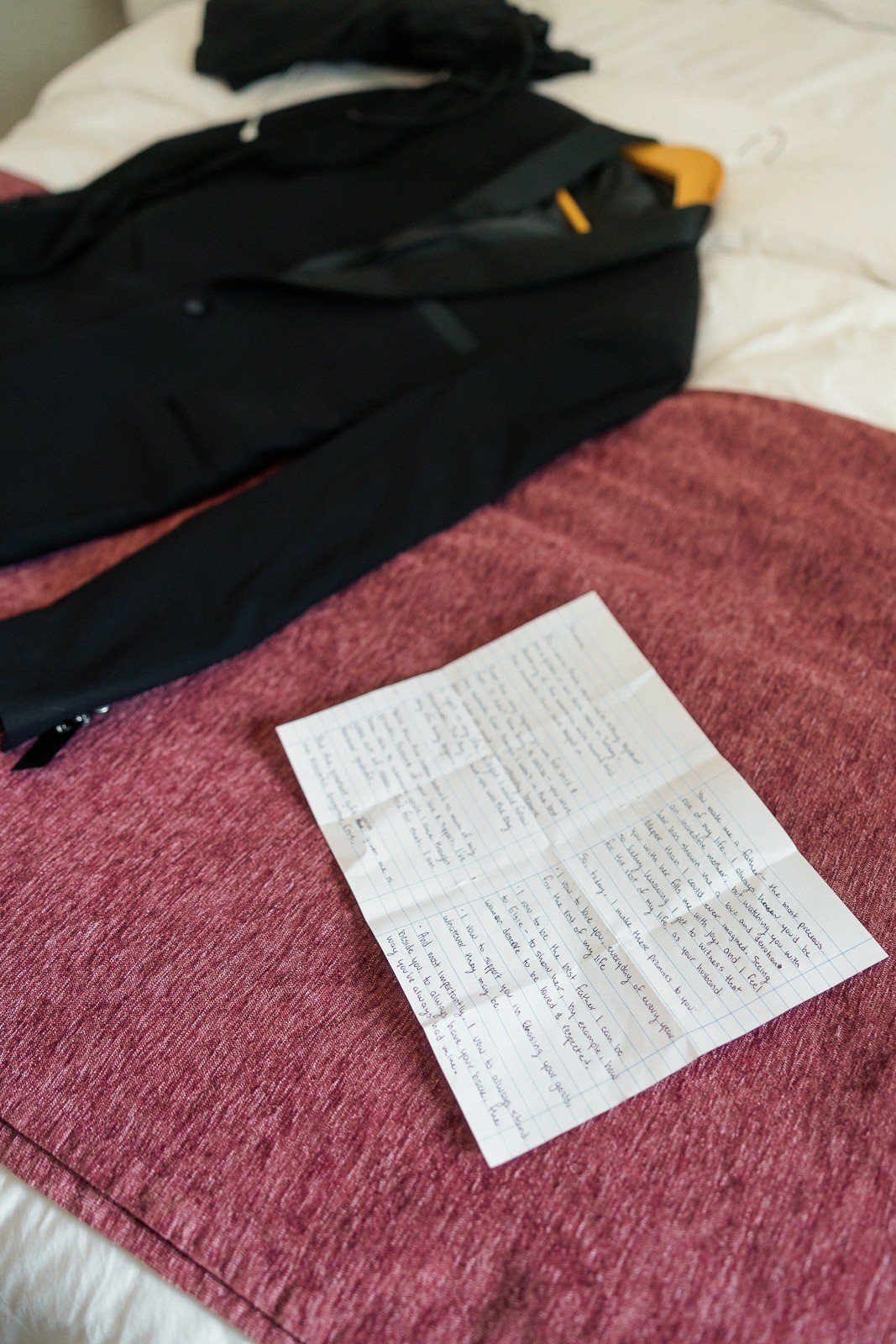
- Write your vows
1–3 Months Before
- Final check-ins with all vendors
- Confirm timeline with photographer and planner
- Pack and prepare (don’t forget marriage documents if legal ceremony)
- Scout backup indoor/covered locations in case of weather
Week Before
- Arrive in Greece with time to acclimate (jet lag is real)
- Do a location scout if possible
- Confirm final details with vendors
- Relax and trust your planning

Legal Marriage: What You Actually Need to Know if you are eloping in Greece
This is where couples get overwhelmed, so let me simplify it:
The Two Options
Option 1: Legal Ceremony in Greece (More Complex)
Requirements:
- Valid passports
- Birth certificates (translated to Greek and apostilled)
- Certificate of No Impediment (proving you’re legally free to marry, translated and apostilled)
- Divorce decrees or death certificates if previously married (translated and apostilled)
- Two witnesses (can be anyone, including your photographer)
- Civil ceremony performed by mayor, deputy mayor, or priest
Timeline: Documents must be submitted 4–8 weeks before the ceremony. Processing times vary by municipality.
Costs: €500–€2,500 depending on whether you hire a lawyer/translator or do it yourself.
Pros: You’re legally married immediately; single ceremony; marriage certificate recognized internationally.
Cons: Significant bureaucracy; requires advance planning; Greek civil ceremonies can feel less personal than symbolic ones.
Option 2: Symbolic Ceremony in Greece (Much Simpler)
Get legally married at home (courthouse or quick ceremony), then have your “real” ceremony in Greece as a symbolic/commitment ceremony.
Requirements: None, legally speaking. You can have any ceremony you want.
Pros: Complete creative freedom; no paperwork stress; celebrant can personalize ceremony exactly how you want; backup plan if legal documents don’t arrive in time.
Cons: You’re already legally married before your “wedding day” (though 80% of couples I work with don’t care).
My recommendation: Unless you have a specific reason to be legally married in Greece (citizenship, legal name change timeline, family expectations), go symbolic. The bureaucracy isn't worth it when the end result is identical either way.
Best Time of Year Eloping in Greece
Greece has distinct seasonal personalities. Here’s what each season actually offers:
Spring (April–May)
Weather: 18–25°C (64–77°F), occasional rain but mostly sunny, wildflowers blooming, green landscapes.
Pros: Beautiful light, fewer tourists, lower prices, nature at its most vibrant, comfortable temperatures for outdoor ceremonies.
Cons: Some businesses haven’t opened yet for season; sea is still cold (15–18°C); slightly higher chance of rain.
Best for: Budget-conscious couples, anyone who wants lush green backdrops instead of dry summer landscapes.
Early Summer (June)
Weather: 25–30°C (77–86°F), long days, minimal rain, sea warming up (20–22°C).
Pros: Excellent weather, everything is open, not yet peak tourist season, long golden hours for photography.
Cons: Prices starting to climb, some popular spots getting busy, can be hot for formal wear.
Best for: Couples who want guaranteed good weather without peak-season crowds.
Peak Summer (July–August)
Weather: 28–35°C (82–95°F), zero rain, constant sun, warm sea (24–26°C).
Pros: Perfect beach weather, warm swimming, vibrant nightlife, endless sunshine.
Cons: Extremely crowded, highest prices (sometimes 2x spring rates), oppressive heat for ceremonies (especially midday), strong meltemi winds in the Cyclades, harsh midday light for photos.
Best for: Couples who prioritize beach/swimming and don’t mind crowds, or who can only travel in summer due to work schedules.
Early Fall (September–October)
Weather: 23–28°C (73–82°F) in September, 18–25°C (64–77°F) in October, decreasing rain, still warm sea.
Pros: My personal favorite season—perfect temperatures, fewer crowds, lower prices, warm sea, golden light, harvest season (amazing food).
Cons: Slight increase in rain probability (still low), some businesses start closing in late October.
Best for: Couples who want the best of everything—good weather, reasonable prices, smaller crowds, romantic light.
Late Fall (November)
Weather: 15–20°C (59–68°F), increasing rain, shorter days, sea cooling down.
Pros: Very few tourists, lowest prices, dramatic weather/light, authentic local experience.
Cons: Weather unpredictable, many hotels/restaurants closed, cold for swimming, need backup indoor plan.
Best for: Adventure elopements, couples who want total privacy, those with flexible dates who can adapt to weather.
Winter (December–March)
Weather: 10–16°C (50–61°F), regular rain, occasional storms, cool and windy.
Pros: Absolute privacy, dramatic moody light, lowest possible costs, experience Greece like locals do.
Cons: Limited services, weather-dependent, cold and potentially wet, very short days (sunset around 5:30pm in December).
Best for: Hardy adventurous couples, photographers wanting moody dramatic imagery, anyone with severe budget constraints.
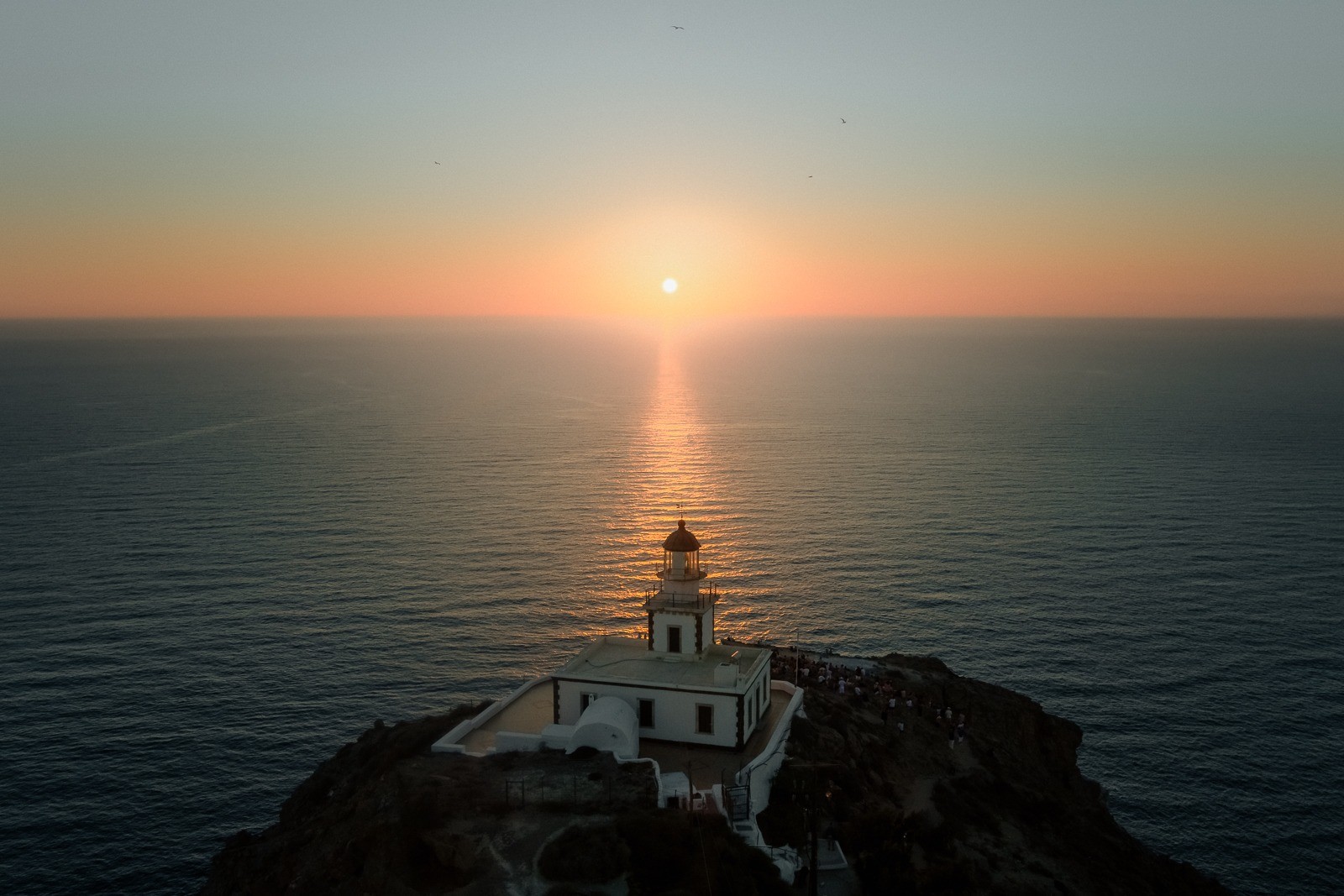
Photographer's pick: Late September or early October. You get warm weather, beautiful light, fewer people, and the landscape has that sun-baked Mediterranean glow. The sea is still warm enough to swim, but it's not oppressively hot for a ceremony.
What to Actually Wear When Eloping in Greece
Practical advice from watching couples navigate Greek terrain in wedding attire:
For Adventure/Outdoor Elopements
What works:
- Flowy, lightweight fabrics (chiffon, crepe, linen blends) that move in wind and don’t trap heat
- Tea-length or midi dresses for easier movement on rocks/beaches
- Separates (skirt and top) for flexibility and comfort
- Suits in linen or lightweight wool—skip the full three-piece in summer
- Comfortable shoes you can actually walk in (wedges for sand, block heels for rocky terrain, sandals for casual)
- Bring a change of shoes: ceremony shoes for photos, comfortable shoes for hiking to location
What doesn’t work:
- Heavy satin or structured fabrics (you’ll overheat)
- Long cathedral trains (they’ll drag in dirt, sand, sea spray)
- Stiletto heels (impossible on Greek terrain)
- Anything strapless in windy locations (constant adjusting ruins candid moments)
For Venue Elopements
You have more flexibility here since you’re not hiking to a clifftop. Traditional wedding attire works fine—just consider:
- Indoor/outdoor transitions (Greek venues often flow between spaces)
- Temperature regulation (venues may not have AC, or AC may be too cold inside vs. hot terrace)
- Photography locations (your venue may be on cobblestones or have steps)
The Outfit Change Strategy
Many couples I work with do this smart:
- Ceremony outfit: Practical, comfortable, photogenic in the landscape
- Dinner outfit: Dressier, more formal, less concerned with durability
This lets you have stunning clifftop photos in something you can actually move in, then change into your dream dress/suit for dinner without worrying about ruining it.

Do You Need a Wedding Planner when eloping in Greece?
Honest answer: It depends on your personality and what kind of elopement you’re having.
You Probably DON’T Need a Planner If:
- You’re having a true adventure elopement (just you two + photographer)
- You’re extremely organized and comfortable coordinating vendors in English
- You’re doing a symbolic ceremony (no legal paperwork)
- You have plenty of planning time (12+ months)
- Your photographer is experienced in Greece and can recommend vendors
You Probably DO Need a Planner If:
- You’re having a legal ceremony in Greece (planners handle paperwork)
- You’re inviting guests (even 10–20 people adds complexity)
- You’re booking a venue with catering, setup, etc.
- You don’t have time to research and vet Greek vendors
- You want someone on-the-ground to handle day-of coordination
- Language barriers make you uncomfortable
The Middle Ground: Partial Planning
Some planners offer “elopement consultation” packages: they help you find vendors, review contracts, handle legal paperwork if applicable, but you manage day-to-day communication. This costs €800–€1,500 instead of full planning (€2,000–€5,000+) and gives you support without the full service price tag.
Permits and Permissions for eloping in Greece: What You Can’t Ignore
Greece has rules about where you can get married, and violating them can result in fines or being shut down mid-ceremony. Here’s what you need to know:
Eloping in Public Beaches in Greece
Permit required: Usually yes, obtained from the local municipality.
Cost: €50–€300 depending on location and season.
Process: Submit request 4–8 weeks in advance. Some popular beaches (like Elafonissi in Crete) have specific designated ceremony areas.
Restrictions: No structures, decorations must be removed immediately, ceremony may have time limits.
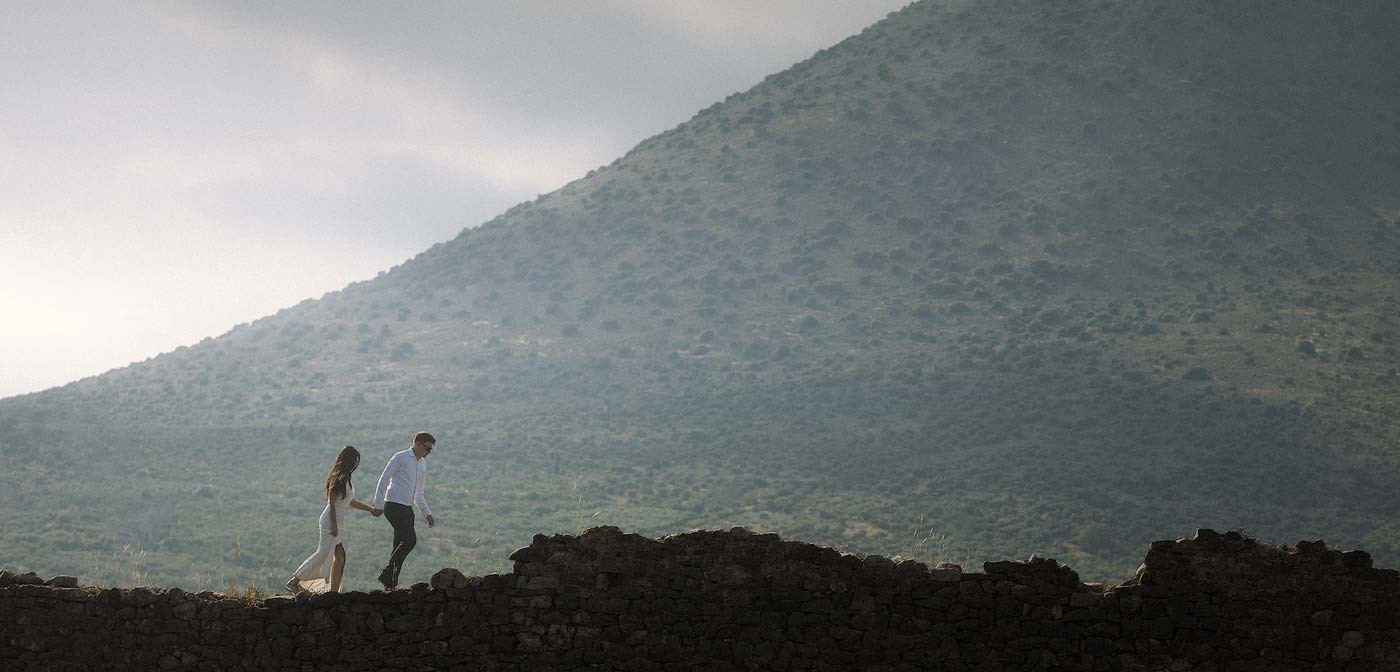
Eloping in Archaeological Sites and Ruins of Greece
Permit required: Yes, from the Greek Ministry of Culture.
Cost: €200–€800+.
Process: Apply 2–3 months in advance minimum. Many sites don’t allow ceremonies at all.
Restrictions: Very limited. Most archaeological sites prohibit private events entirely.
Eloping at Greek Churches and Chapels
Permit required: Permission from the local parish priest.
Cost: Donation expected, typically €100–€500.
Process: Your planner or celebrant usually handles this.
Restrictions: Orthodox churches may not allow non-Orthodox ceremonies. Small private chapels are more flexible.
Eloping in Private Property (Villas, Hotels, Venues)
Permit required: Only permission from the property owner.
Cost: Usually included in venue rental.
Process: Simple – book it.
Restrictions: Whatever the property sets.
Eloping in Cliffs, Hiking Trails, Remote Locations of Greece
Permit required: Technically gray area. Most photographers and couples just go.
Cost: Free if no formal setup.
Process: Scout location, go early or late to avoid crowds.
Restrictions: If you’re not setting up chairs/arches/etc. and it’s a truly public wilderness area, you’re generally fine. Use common sense and leave no trace.
My approach: For remote adventure elopements, we don't set up anything—no chairs, no arches, no decorations. You're just two people exchanging vows in nature, which doesn't require permits. The moment you start bringing in furniture or formal structures, you need permission.
What Couples Wish They’d Known Before Eloping in Greece
Based on post-elopement conversations with dozens of couples who eloped in Greece:
- 1. “The wind is no joke.”
The meltemi winds in the Cyclades (June–September) are relentless. Hair and makeup get destroyed. Veils become kites. Loose papers blow away. Plan for it: secure hairstyles, weighted ceremony materials, have a backup indoor location.
- 2. “Travel days are harder than expected.”
Don’t schedule your elopement the day you arrive in Greece. International flights, jet lag, and travel stress are real. Build in at least one full day to acclimate, rest, and do a location scout.
- 3. “We should have stayed longer.”
The most common regret is not extending the trip. You’ve traveled all this way, stay an extra few days. Explore the island, take your time, actually enjoy being newlyweds in Greece instead of rushing back to the airport.
- 4. “Sunset ceremonies in Greece sound romantic but the light isn’t always best.”
Photographers will tell you: golden hour (1–2 hours before sunset) often gives better light than sunset itself. Sunset can be hazy, backlit, or crowded. Discuss actual lighting with your photographer instead of just assuming “sunset = romantic.”
- 5. “We underestimated how much walking/hiking would be involved.”
Many beautiful ceremony locations require 10–30 minutes of walking, sometimes on uneven terrain. Know this in advance and prepare physically and wardrobe-wise.
- 6. “The photos mattered more than we thought they would.”
Many couples initially think “we’re just eloping, photos aren’t a big deal,” then realize afterward that photos are the only tangible thing you have from the day. Don’t cheap out on photography—it’s what you’ll have forever.
- 7. “Local restaurant reservations fill up fast.”
Especially in popular islands during peak season. Book your post-elopement celebration dinner well in advance. Many top restaurants require reservations weeks ahead.
- 8. “We wish we’d told a few people.”
Some couples elope in total secret, then regret not sharing the moment with parents or close friends. You don’t have to invite them to Greece, but consider letting key people know it’s happening so they can celebrate with you in spirit. Getting this right makes the day flow smoothly without feeling rushed.


Enjoy Your Greece Elopement
Arriving in Greece to elope: First Few Days
Arrive at least 2-3 days before your elopement. This gives you time to:
- Recover from jet lag
- Do final location walk-through
- Meet with key vendors face-to-face
- Adjust to the climate and pace
- Actually relax and enjoy Greece
Use this time wisely:
- Confirm final details with your planner or venue coordinator
- Break in your wedding shoes (walk around in them)
- Scout photo locations with your photographer if desired
- Get a light tan if you want (but use sunscreen!)
- Relax and reconnect with each other
Day-Before Checklist for Your Greece Elopement
Confirm everything one last time:
- Call or text key vendors
- Review timeline with planner/coordinator
- Prepare tip envelopes for vendors (if you’re tipping)
- Pack emergency kit (safety pins, stain remover, band-aids, pain relievers)
- Charge all devices (phones, cameras)
- Set multiple alarms
Attend your welcome dinner (if any) but don’t stay out too late. You want to feel rested and energized for your wedding day.
Try to relax. Everything is planned. Your vendors are professionals. Tomorrow is about celebrating, not perfection.
Your Day is here: Letting Go and Being Present
The most important advice I can give you: be present. Your wedding day will fly by. The moments you’ll remember most aren’t the perfectly arranged centerpieces. You’ll remember:
- The way your partner looked at you during vows
- You crying happy tears
- Dancing with your partner under Greek stars
- That spontaneous moment when you sang along to a song
- The feeling of being surrounded by a stunning landscape
Trust your vendors. You hired them for their expertise. Let them do their jobs while you focus on experiencing your day.
Take moments just for the two of you. I always build in time for couples to step away, even for just 5 minutes, to take it all in together.
Don’t sweat the small stuff. Something minor will probably go wrong (it always does). It won’t matter in your memories or your photos.
After You elope in Greece: Extending Your Stay
Most couples stay in Greece for 7-14 days total, combining their elopement wedding with their honeymoon.
Smart post-wedding plans:
- Stay an extra 2-3 days at your wedding location to decompress
- Island-hop to somewhere new (if you married in Santorini, head to Paros or Naxos next)
- Explore mainland Greece (Athens, Delphi, Meteora)
- Simply relax and enjoy being newlyweds
Don’t over-schedule your honeymoon portion. You’ll be exhausted. Build in downtime for sleeping late, long dinners, and doing absolutely nothing.
Frequently Asked Questions About Eloping in Greece
Yes, Greece allows non-residents to legally marry, but the paperwork is substantial. Most couples opt for symbolic ceremonies to avoid bureaucracy.
s for 20-50 guests typically run €15,000-€40,000. Larger celebrations for 50-100 guests range from €40,000-€80,000. Luxury weddings exceed €80,000.
For legal ceremonies: yes, two witnesses required (can be anyone, including your photographer or planner). For symbolic ceremonies: no legal requirement, but many celebrants include witness signing as part of the ritual.
Always have a backup plan, especially in shoulder seasons (April-May, October-November). Many venues have covered terraces. Outdoor locations should have a nearby indoor alternative scouted in advance. Remember: dramatic storm light often makes incredible photos.
Top elopement photographers in Greece book 12–18 months out for peak season (May–October). If you’re flexible on dates or eloping off-season, you can sometimes book 3–6 months ahead.
Greece legalized same-sex marriage in 2024. Major islands (Santorini, Mykonos, Crete) are very welcoming. Smaller, more traditional islands may be less openly supportive. Symbolic ceremonies for LGBTQ+ couples are fully accepted everywhere.
Logistically challenging due to pet travel requirements (microchip, vaccinations, EU pet passport or health certificate, 4-month advance planning). If your dog is already in Europe, it’s doable. If you’re flying internationally, the bureaucracy is intense. Many couples bring a photo or incorporate their pet symbolically instead.
Increasingly common and worthwhile if budget allows. Video captures the emotion, sounds, and movement that photos can’t. Elopement videography typically costs €1,500–€5,000 depending on hours and editing.
Official Orthodox weddings require at least one person to be Orthodox Christian. However, private chapels may allow symbolic ceremonies, and some priests are flexible. Discuss with your celebrant or planner.
Tipping culture is less aggressive than the US but still appreciated. For wedding vendors: 10–15% for exceptional service is generous. Restaurants: round up or leave 5–10%. Taxis: round up to nearest euro.
Final Thoughts: What Makes a Greece Elopement Actually Worth It
I’ve photographed several elopements across Greece, from windswept clifftops in Karpathos to luxury terraces in Santorini. The couples who love their decision most aren’t necessarily the ones who spent the most money or chose the most famous island.
They’re the ones who knew what they actually wanted—adventure or polish, privacy or proximity to good restaurants, dramatic landscapes or convenient logistics—and built their elopement around that clarity.
Greece rewards couples who embrace its reality: the wind will mess up your hair, the light will be harsh at midday, the terrain will challenge your shoes, and something won’t go exactly as planned. But in exchange, you get vows that mean something because they were said in a place that demanded intention. You get photos that look like nowhere else on earth. You get a wedding day that felt like yours, not a production for others.
That’s what eloping in Greece actually is: trading performance for experience, predictability for beauty, and comfort for a story you’ll tell differently than everyone else.
If that sounds like what you want, start planning. Greece isn’t going anywhere, but your window to do this—while you’re young enough, brave enough, and unencumbered enough—might be smaller than you think.
About the Author: After photographing several elopements across the Greek islands since 2018, I've developed an intimate understanding of what makes these ceremonies succeed or struggle. This guide represents hundreds of hours of on-the-ground experience, vendor relationships, and honest conversations with couples about what they wish they'd known. If you're planning a Greece elopement and want straightforward guidance, I'm here to help.