The Best Greek Islands for Wedding Photography | An Honest Comparison
Which are the best Greek islands for Wedding Photography?
Choosing the best Greek islands for wedding photography is one of the most important decisions you will make when planning your celebration in Greece — and it is one that most couples get wrong.
Not because they choose badly. But because they choose based on reputation rather than reality. They book Santorini because they have seen it on Instagram, or Mykonos because a friend went there in summer. Then they arrive and discover that the most famous island is also the most crowded, that the famous sunset spot is shared with two hundred tourists, and that the light they imagined turns out to be something you have to work very hard to find.
I have been photographing weddings and elopements across Greece for over a decade. Santorini, Mykonos, Tinos, Karpathos, Crete, Kefalonia, Hydra, the Athens Riviera. I know what each island gives you and what it takes away. This guide is the honest comparison I wish every couple had before they started planning.
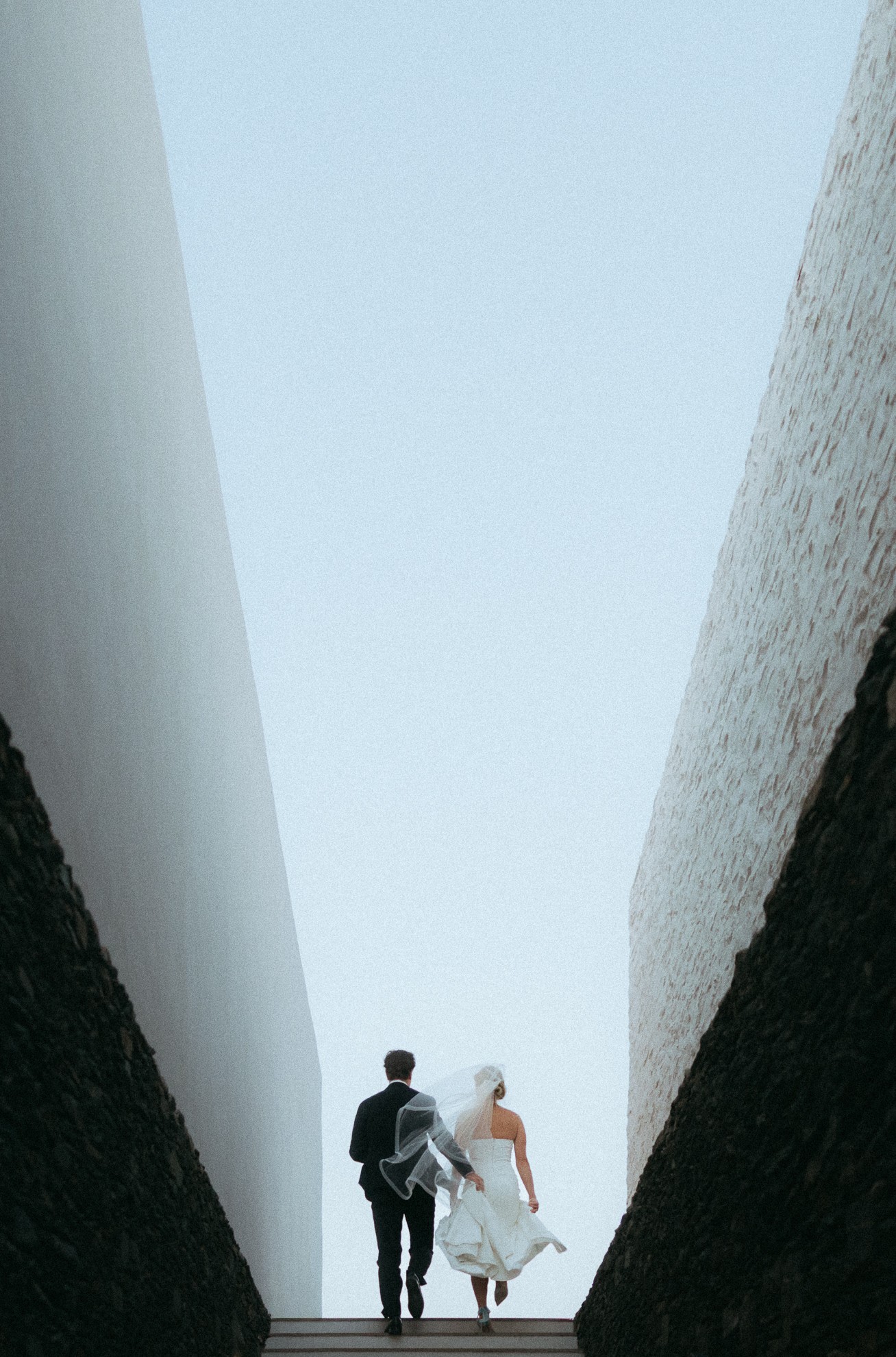
What Makes a Greek Island Good for Wedding Photography?
Before comparing specific islands, it helps to understand what actually matters photographically. Most couples think about how an island looks. Photographers think about something different entirely.
- Light is the first consideration. The quality, direction, and duration of golden hour varies by season and geography. Islands with higher elevation create different light than flat coastal stretches. The volcanic landscape of Santorini scatters light differently than the pine-covered hills of Kefalonia.
- Crowds determine access. The most beautiful location means nothing if you share it with tour groups. Some islands offer genuine solitude — others require very precise timing to find even a moment of privacy in the most iconic spots.
- Terrain affects what is possible. Cliffs, cobblestones, beaches, mountain trails — each creates different opportunities and challenges for both the couple and the photographer. Knowing a couple’s physical comfort level matters as much as knowing the landscape.
- Logistics shape the whole day. How easy it is to move between locations, how reliable transportation is, and how much of the day gets lost to travel rather than photography — all of this affects the final gallery.
With those criteria in mind, here is the honest breakdown.
Santorini
Best for: Iconic caldera views, luxury venues, couples who want the classic Greek island aesthetic
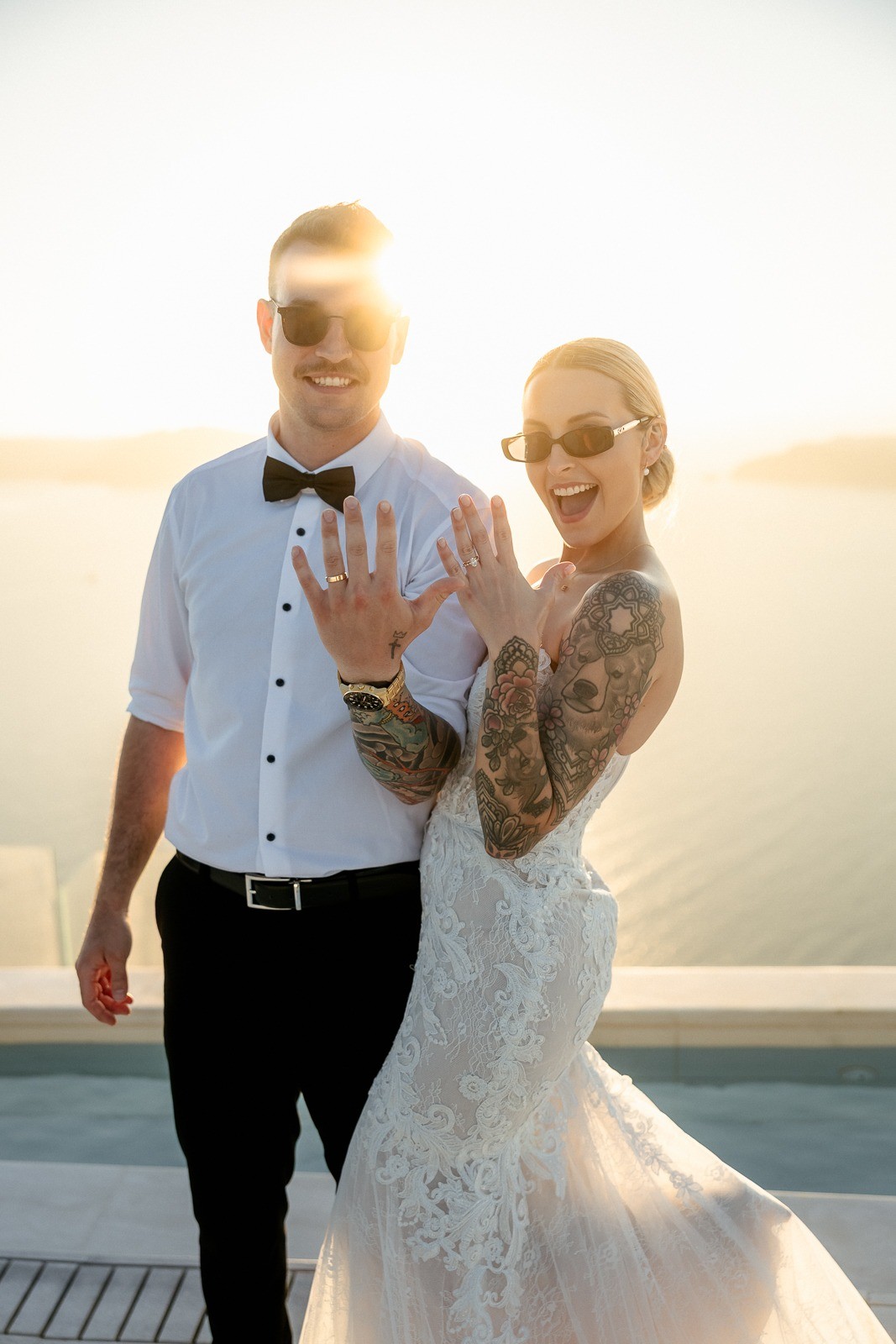
Santorini produces some of the most recognizable wedding images in the world, and for good reason. The volcanic caldera, the whitewashed architecture, the way the light catches the blue domes of Oia at golden hour, it is genuinely extraordinary. No photograph does it full justice until you are standing there.
The honest truth, however, is that Santorini requires more planning than any other island to photograph well. The most famous locations, the windmills, the Oia cliffside, the caldera viewpoints, become extremely crowded between June and September. Arriving at the right moment, with the light in the right position and the crowds momentarily thinned, takes local knowledge and precise timing. Photographers who visit Santorini occasionally will spend your portrait session managing the environment. Photographers who know the island can navigate around it entirely.
From a light perspective, Santorini is considered one of the best Greek islands for wedding photography .
The volcanic rock absorbs heat and releases warmth that affects the colour of the late afternoon light in a way that feels cinematic almost without effort. Golden hour here starts earlier and burns longer than on flat-terrain islands, which gives you more usable shooting time.
- Best months for photography: May, September, October. The island is quieter, the light is warmer, and the caldera has a quality in October that genuinely feels like the end of a film.
- Photography challenge: Crowds at peak locations between July and August. The solution is early morning or late evening sessions, and locations slightly off the main tourist circuit.
- Best locations: Skaros Rock, Imerovigli cliffside terraces, Pyrgos village at dusk, private villa terraces, Rocabella and similar caldera-edge properties
→ Read the full Santorini elopement guide: Santorini Elopement Photographer | Complete Guide
Mykonos
Best for: Couples who want sophistication, Cycladic architecture, and a vibrant atmosphere around their celebration
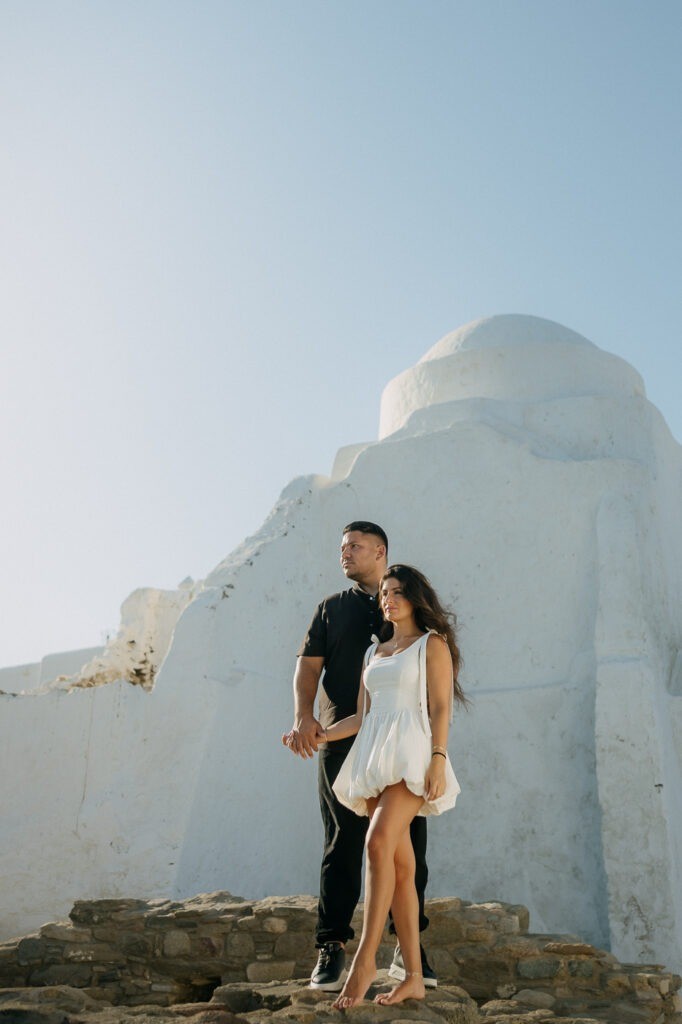
Mykonos is the most photogenic island in Greece for urban, architectural photography. The narrow streets of Chora, the painted doors, the windmills against a deep blue sky, the bougainvillea spilling over whitewashed walls, every turn creates a natural frame. Working through Mykonos Town with a couple who is relaxed and playful produces extraordinary images.
The challenge with Mykonos is the same as Santorini: peak season crowds. July and August bring an intensity of tourism that makes the most famous spots feel more like a film set than an island. September changes everything. The energy quietens, the quality of light deepens, and you suddenly have Mykonos Town’s backstreets almost to yourselves.
One aspect of Mykonos that photographers love and couples often underestimate is the wind.
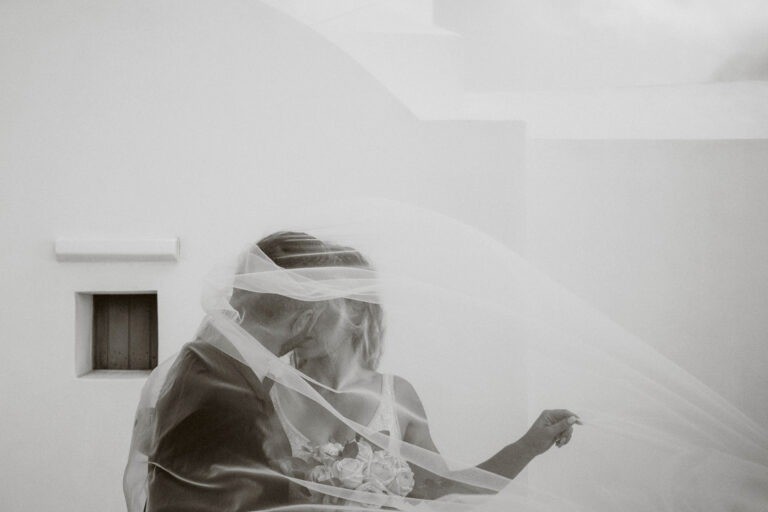
The meltemi wind that blows across the Cyclades in summer creates movement in fabric, hair, and landscape that adds extraordinary life to images. Veils, flowing dresses, and loose linen suits all respond beautifully. Some of the most dynamic images I have made anywhere in Greece were taken on Mykonos on a windy September afternoon.
- Best months for photography: May, September. Both offer beautiful light, manageable crowds, and that particular Cycladic clarity in the air.
- Photography challenge: Like Santorini, peak season crowds require strategic timing and local knowledge to navigate effectively.
- Best locations: Mykonos Town backstreets, Mt. Prophet Elias at sunrise, Little Venice at blue hour, private villa terraces with Aegean views, Agios Ioannis beach at sunset
→ Read the full Mykonos elopement guide: Mykonos Elopement Photographer | Complete Guide
Tinos
Best for: Couples who want authentic Cycladic beauty without the crowds, genuine intimacy, and a sense of discovery
Tinos is the island I recommend most consistently to couples who are drawn to the Cyclades but do not want to share their wedding day with thousands of tourists. The island has the same whitewashed architecture, the same extraordinary light, and the same dramatic coastline as its more famous neighbours, but a fraction of the visitors.
From a photography perspective, Tinos is one of the most versatile islands in Greece.
The stone villages of the interior, Falatados, Pyrgos, Volax, offer medieval lanes and carved marble facades that photograph unlike anything else in the Cyclades. The coastline alternates between exposed rocky headlands and sheltered sandy coves. The terraced hillsides above the sea, particularly in the late afternoon light, produce images that consistently surprise couples when they see the final gallery.
Tinos also rewards spontaneity in a way that more heavily touristed islands cannot. Moving through it’s villages at golden hour and turning into an unexpected alley, a covered passageway opening onto a terrace above the sea, these moments of discovery become genuinely extraordinary images. On Santorini, every alley has been photographed a thousand times. On Tinos, some of the best locations still feel like secrets.
- Best months for photography: May, June, September, October. The island is beautiful year-round, but these months offer the best combination of light and accessibility.
- Photography challenge: Fewer luxury venues than Santorini or Mykonos, so couples seeking ultra-polished venue settings have fewer options. For those drawn to authentic locations, this is an advantage, not a drawback.
- Best locations: Kardiani village, Pyrgos marble village, Kolymbithra beach, terraced hillsides above Isternia, the road between Falatados and the coast at golden hour
→ See a real Tinos elopement: Tinos Wedding Photographer | A Heartfelt Elopement in Odera

Karpathos, one of the best Greek islands for wedding photography
Best for: Couples who want raw adventure, dramatic landscapes, and photographs that look like nowhere else in Greece
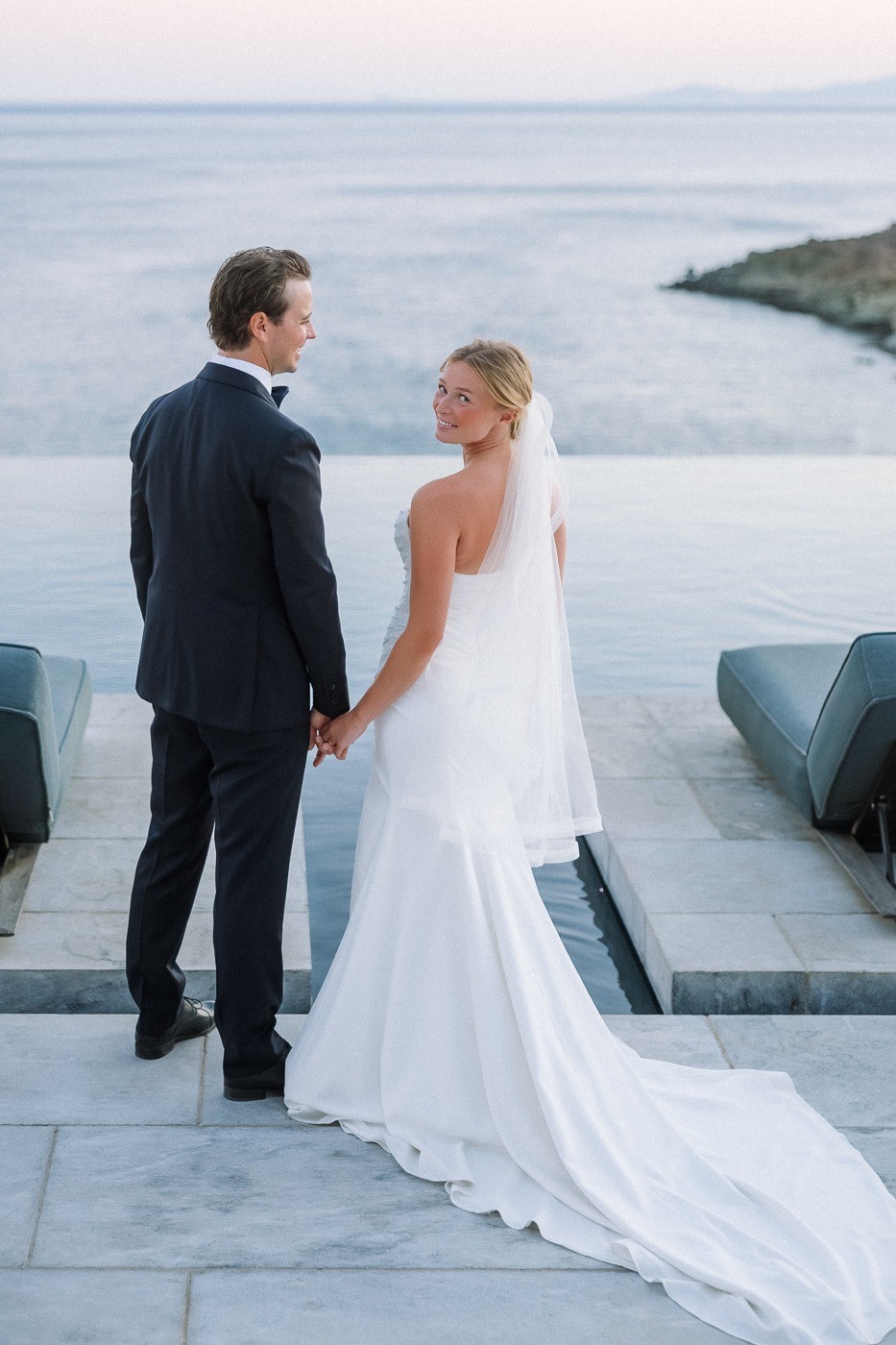
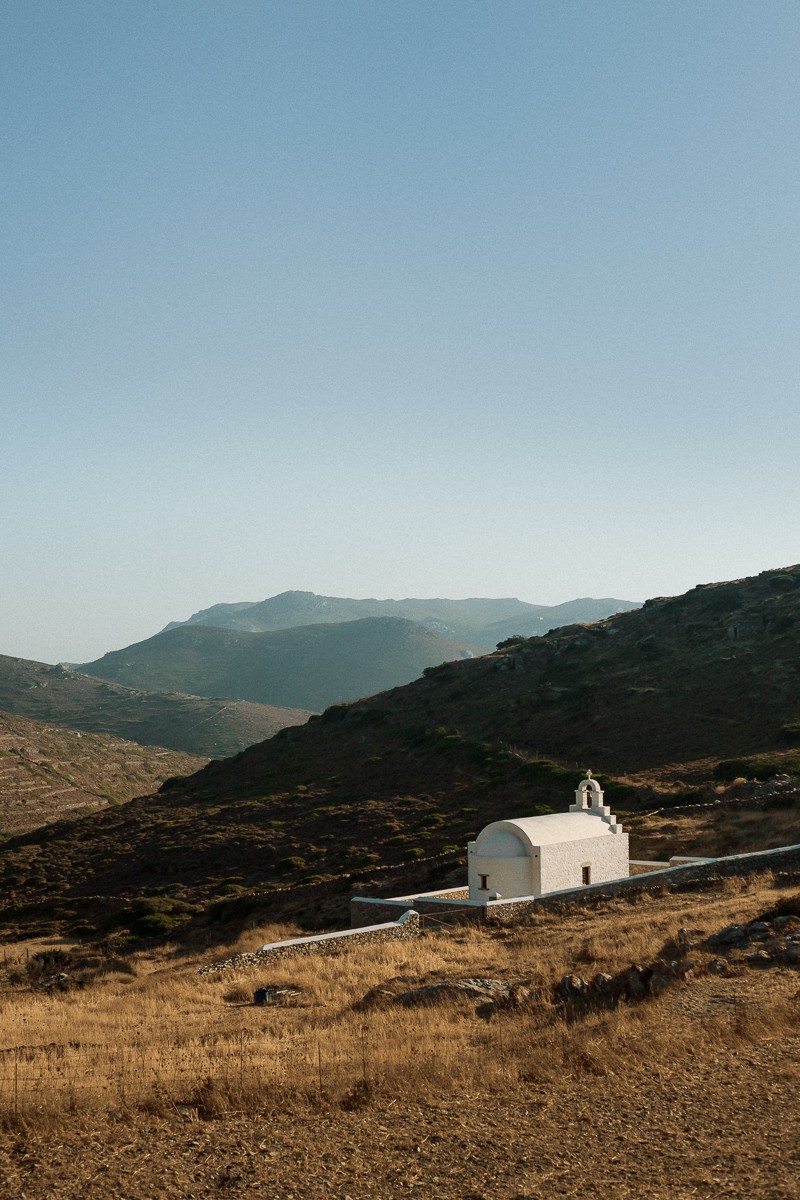
Karpathos is where I am most at home, and arguably where I produce my most extraordinary work. The island sits at the southern end of the Dodecanese, remote enough that it has retained an authenticity that most Greek islands lost decades ago. The landscape is dramatic in a way that goes beyond picturesque. Vertical cliffs, ancient villages clinging to hillsides, beaches accessible only by boat, and a quality of light in the late afternoon that I have never seen replicated anywhere else.
The wind on Karpathos is relentless and powerful. For photographers, this creates movement and drama in every frame and for couples, it means loose hair and flowing fabric are not just acceptable. They are essential to the images. Everything feels alive.
Karpathos does not offer the polished luxury infrastructure of Santorini.
It offers something rarer: the feeling that you are the only people in Greece. The village of Olympos, perched on a mountain ridge, has barely changed in centuries. The beach at Apella is reached by a short trail and rewards you with water the colour of glass and cliffs that drop vertically into the sea. These are locations that produce images couples cannot find anywhere else in the Mediterranean.
- Best months for photography: May, June, September, October. July and August bring the strongest winds, which can be challenging logistically while still producing extraordinary images.
- Photography challenge: Limited luxury accommodation and restaurant options compared to more developed islands. This is the right island for couples who prioritise the experience and the images over five-star infrastructure.
- Best locations: Apella Beach, Olympos mountain village, Kyra Panagia ruins, Ammopi coastal cliffs, Lefkos lagoon at dusk, Afiartis area
→ See a real Karpathos Wedding: Karpathos Wedding Photographer | Jakob & Johanna’s Four-Day Austrian Celebration in Karpathos
Crete
Best for: Couples who want variety, authenticity, and value. And who are not looking for a single iconic backdrop
Crete is the most diverse island in Greece for photography
And also the most underestimated. At over 250 kilometres long, it offers mountain gorges, pink sand beaches, Venetian harbour towns, ancient ruins, and vineyards, all on a single island. No two Crete weddings look the same, which makes it particularly interesting for photographers who want to tell a genuinely original story.
The light in Crete is excellent throughout the season
With the western end of the island, around Chania and the Akrotiri peninsula, offering particularly beautiful late afternoon conditions. The White Mountains provide an extraordinary backdrop for couples drawn to dramatic natural landscapes. Elafonissi beach, with its shallow pink-tinged water, creates colour in photographs that feels almost otherworldly.
Crete is also significantly more affordable than Santorini and Mykonos, which means couples often invest more of their budget in photography rather than venue fees, a trade-off that I think serves the final result beautifully.
- Best months for photography: May, June, September, October. The island is accessible year-round, but these months offer the best combination of weather, light, and reasonable crowd levels.
- Photography challenge: The island’s size means logistics require more planning. Distances between locations can be significant, so a well-structured timeline is essential.
- Best locations: Balos Lagoon (boat required), Elafonissi pink sand beach, Chania Venetian harbour, White Mountains backdrop, Rethymno old town at dusk
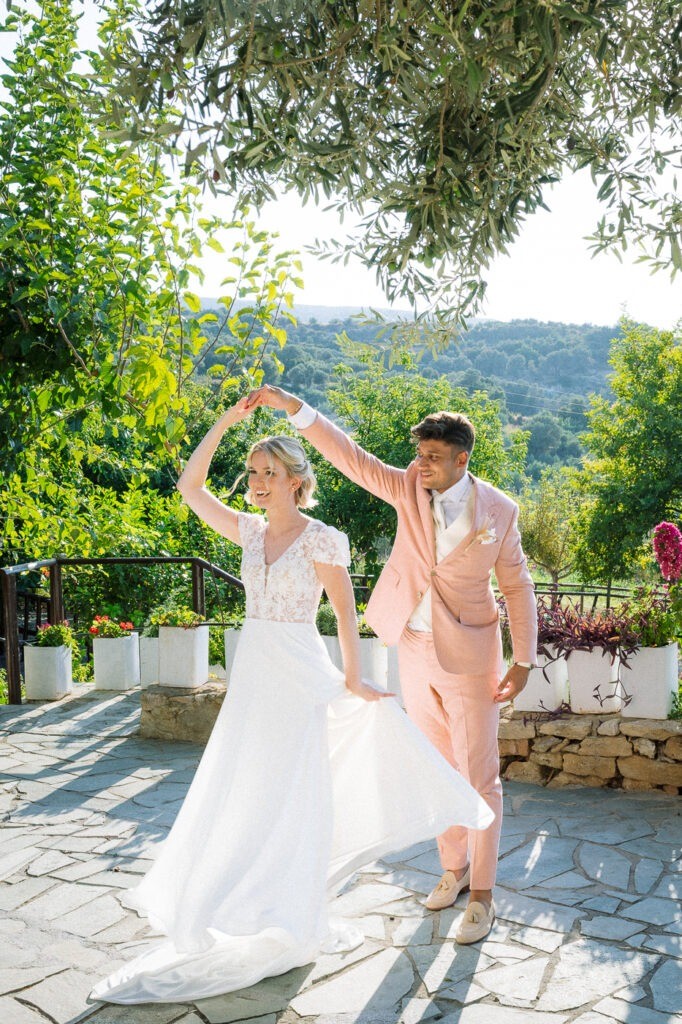
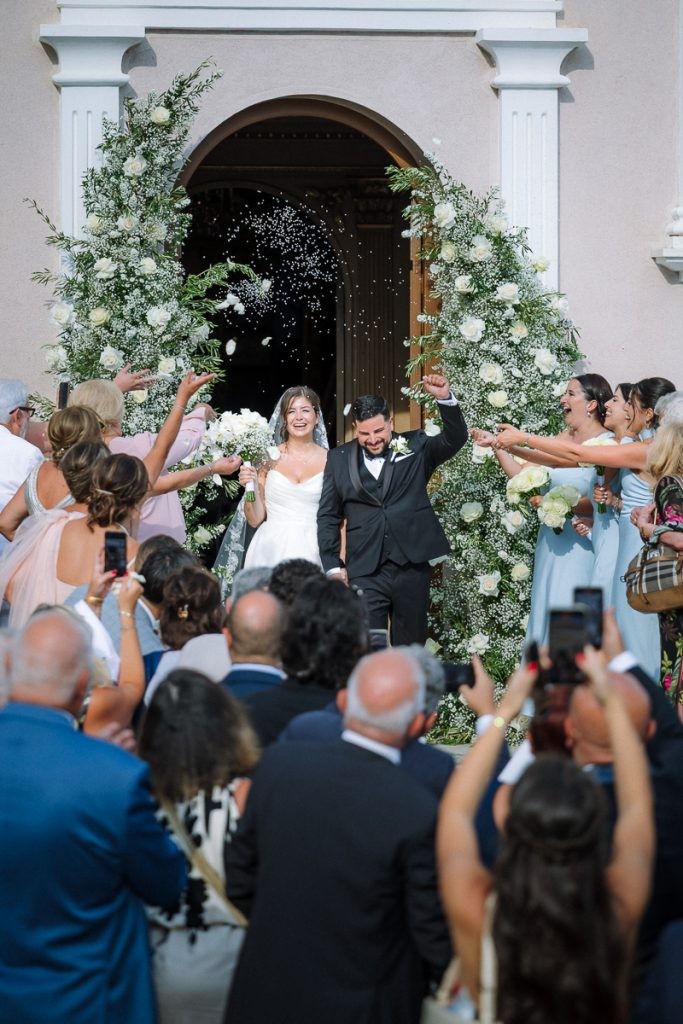
Kefalonia
Best for: Couples drawn to lush, green landscapes, dramatic sea caves, and something completely different from the Cycladic aesthetic.
Kefalonia is the Ionian island that surprises every couple who visits. After the white and blue palette of Santorini and Mykonos, the vivid green hills, cypress trees, and turquoise water of Kefalonia feel almost surreal. The landscape is more Mediterranean in the classic sense, rich, textured, and lush even in summer.
Myrtos Beach, consistently ranked among the most beautiful beaches in Europe
It creates a backdrop that genuinely competes with anything in the Cyclades for photographic impact. The sea caves at Melissani, the mountainside villages, the sweeping coastal roads, all of it photographs in a way that feels cinematic and distinctive.
Kefalonia suits couples who want their images to look different from the typical Greece wedding gallery. The colour palette is different, the light is different, and the overall feeling is of a Mediterranean that has not been filtered through an Instagram aesthetic.
- Best months for photography: May, June, September. The island is at its most lush in spring and early summer. September combines warm weather with quieter conditions.
- Photography challenge: Fewer established wedding photographers based here, and less developed wedding infrastructure. Working with a Greece-based photographer who travels to the island, rather than a local generalist, is strongly recommended.
- Best locations: Myrtos Beach at golden hour, Assos village, Fiscardo harbour, mountainside roads at dusk, Antisamos Bay
Lefkada
Best for: Couples who want dramatic Ionian beauty, easy accessibility from mainland Greece, and diverse landscapes all on one island
Lefkada holds a practical advantage that no other Greek island can offer. You can drive directly to it from mainland Greece via a floating bridge, without a single ferry. For destination wedding couples coordinating guest travel, this is genuinely significant. Guests who are nervous about island logistics, older family members, or anyone with heavy luggage simply drive on. That logistical ease frees up energy and time that other islands consume in transit.
From a photography perspective, Lefkada belongs to the Ionian group and the Ionian light is distinctly different from the Aegean. Something about the western position, the greener landscape, and the softer atmosphere creates a quality of illumination that feels more romantic and slightly dreamier than the sharp clarity of Cycladic light. Golden hour here flatters naturally. Skin tones glow without effort. The overall palette is richer and more layered than what Santorini or Mykonos typically offers.
The island’s landscape is extraordinarily diverse for its size.
Porto Katsiki and Egremni beaches, consistently ranked among the most beautiful in Europe, create backdrops of white cliff and turquoise water that compete photographically with anything in Greece. Mountain villages cascade down hillsides above the sea. The contrast between lush green hills, dramatic cliffs, and deep blue water produces galleries that look genuinely unlike any other Greek island.
Lefkada also suits couples who want authenticity without sacrificing beauty.
The island is developed enough to offer excellent accommodation and restaurants, but retains a genuine Greek character that heavily touristed islands have slowly lost. Moving through a Lefkada village at golden hour, with the sea visible below and the stone houses glowing in warm light, feels completely real — not curated for Instagram.
- Best months for photography: May, June, September. The island is green and lush in spring, and September offers warm weather, quieter conditions, and beautiful late-season light.
- Photography challenge: Fewer luxury wedding venues compared to Santorini or Mykonos, and the dramatic beaches like Porto Katsiki require a short hike down steep steps. Worth every step photographically, but worth knowing in advance.
- Best locations: Porto Katsiki beach at golden hour, Egremni cliffs, Agios Nikitas village, Kathisma beach, mountain roads with sea views at dusk, Lefkada Town waterfront
→ See a real Lefkada wedding: Lefkada Wedding Photographer | Andreas & Alex’s Romantic Island Celebration
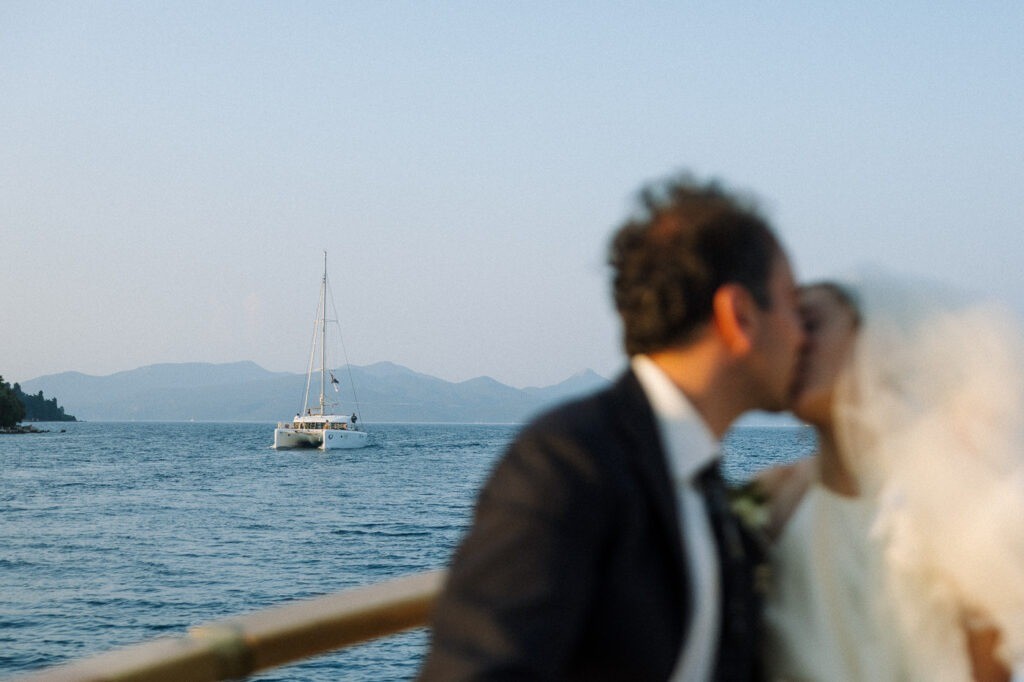
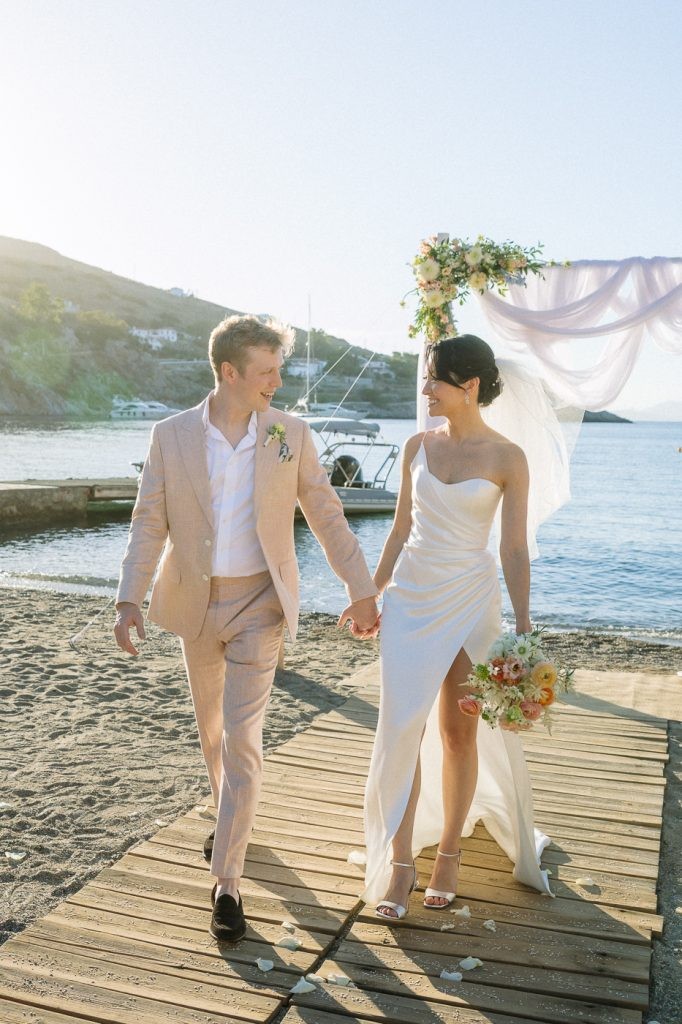
Hydra
Best for: Couples who want timeless elegance, a genuinely car-free island atmosphere, and architecture that has barely changed in two centuries
Hydra is unlike any other island in Greece — and the reason is simple: no cars exist here. No motorcycles, no buses, no engines of any kind except the occasional garbage truck. Transportation happens by foot, donkey, or water taxi. That single fact changes everything about the atmosphere of the place. The stone-paved streets are quiet. The port moves at walking pace. The 18th-century architecture stands exactly as it was built, uninterrupted by modern development. Hydra photographs like a place that time forgot to touch.
For wedding photography, this creates conditions that are genuinely rare in the Mediterranean. Every street corner is photogenic without any staging. The absence of traffic means portraits in the port lanes carry no visual noise — no parked cars, no road signs, no modern infrastructure breaking the frame. The stone houses, the donkeys carrying luggage up the hillside, the water taxis arriving at the harbour — all of it contributes to images that feel completely timeless and unlike anything produced on a more developed island.
The light on Hydra is part of the Saronic Gulf’s particular quality
Warm, directional, and generous during golden hour in a way that complements the island’s warm stone tones beautifully. Late October weddings here, as I have experienced firsthand, can feel like summer — warm sunshine, calm seas, and that extraordinary Aegean clarity that makes every frame feel effortless.
Hydra suits couples who want their wedding gallery to feel genuinely classic. Not trendy, not of-the-moment — but the kind of images that will look extraordinary in thirty years, because the island itself looks the same as it did thirty years ago.
- Best months for photography: May, June, September, October. Hydra is one of the best islands in Greece for late-season weddings — the mild Saronic climate means October celebrations often feel like midsummer.
- Photography challenge: No vehicles means all equipment and logistics move on foot or by boat. This requires advance planning with a photographer experienced in the island’s specific logistics. The port area can be busy with day-trippers arriving by ferry, so timing portrait sessions away from ferry arrival times is essential.
- Best locations: The historic port at golden hour, stone-paved lanes above the harbour, Mandraki Beach, the hillside paths above the town, the waterfront at blue hour
→ See a real Hydra wedding: Hydra Wedding Photographer | C & K’s Documentary Celebration
The Honest Summary
No single island is objectively the best Greek island for wedding photography. The right island is the one that matches what you actually want, not what you have seen on Instagram.
For iconic and instantly recognisable images, Santorini is your answer. Couples drawn to sophisticated urban energy will find Mykonos unmatched. Authentic Cycladic beauty without the crowds belongs to Tinos. Raw drama and adventure? That is Karpathos. For variety and genuine value, Crete delivers more per kilometre than any other island. Something lush, colourful, and genuinely different points you toward Kefalonia. Dramatic Ionian beauty with the ease of driving straight onto the island makes Lefkada a compelling choice. Timeless elegance in a car-free setting belongs entirely to Hydra.
What matters more than which island you choose is working with a photographer who knows it
Genuinely knows it, not from a single visit during peak season but from years of understanding how the light moves, where the crowds thin, and which corners produce images that feel like they could not have been made anywhere else.
That local knowledge is the difference between a Greece wedding gallery that looks like Greece and one that looks like your Greece.
If you would like to talk through which island suits your vision, I would love to hear from you →
Frequently Asked Questions — best Greek islands for wedding photography
There is no single answer, it depends entirely on your priorities. Santorini offers iconic caldera views, Tinos provides authentic Cycladic intimacy without crowds, Karpathos delivers raw dramatic landscapes, and Crete offers the most variety. The best island is the one that matches what you want your gallery to feel like.
In July and August, popular spots require very precise timing and local knowledge to photograph without crowds. In May, September, and October, Santorini is far quieter and genuinely easier to photograph. The island is still extraordinary — it just requires a photographer who knows where and when to work.
Karpathos and Santorini both produce exceptional golden hour light for different reasons — Karpathos due to its elevation and remoteness, Santorini due to the volcanic landscape. Tinos in October and Crete in May both offer outstanding photographic conditions. Every island has its best season and its best hours.
Yes — a Greece-based photographer who travels across the islands is far better positioned than someone flying in from abroad. Lower travel fees, genuine local knowledge, and established relationships with local vendors all benefit your wedding day.
Both are outstanding but for different reasons. Santorini offers more dramatic natural backdrops — the caldera, volcanic cliffs, extraordinary light. Mykonos offers more architectural variety and a more vibrant urban energy. The choice depends on whether you are drawn to dramatic nature or cinematic streets.
May and September are the two best months across most islands — beautiful light, manageable crowds, comfortable temperatures, and lower prices than peak summer. October is outstanding on islands like Tinos, Karpathos, and Santorini.
About
Vasilis Liappis is a Greece wedding and elopement photographer based in Athens and Karpathos. His work has been recognised by Junebug Weddings, ProWed (Top #5 Greece 2023), Fearless Photographers, and MyWed (Top #5 Greece 2025). He photographs love stories across Santorini, Mykonos, Tinos, Karpathos, Crete, and beyond.